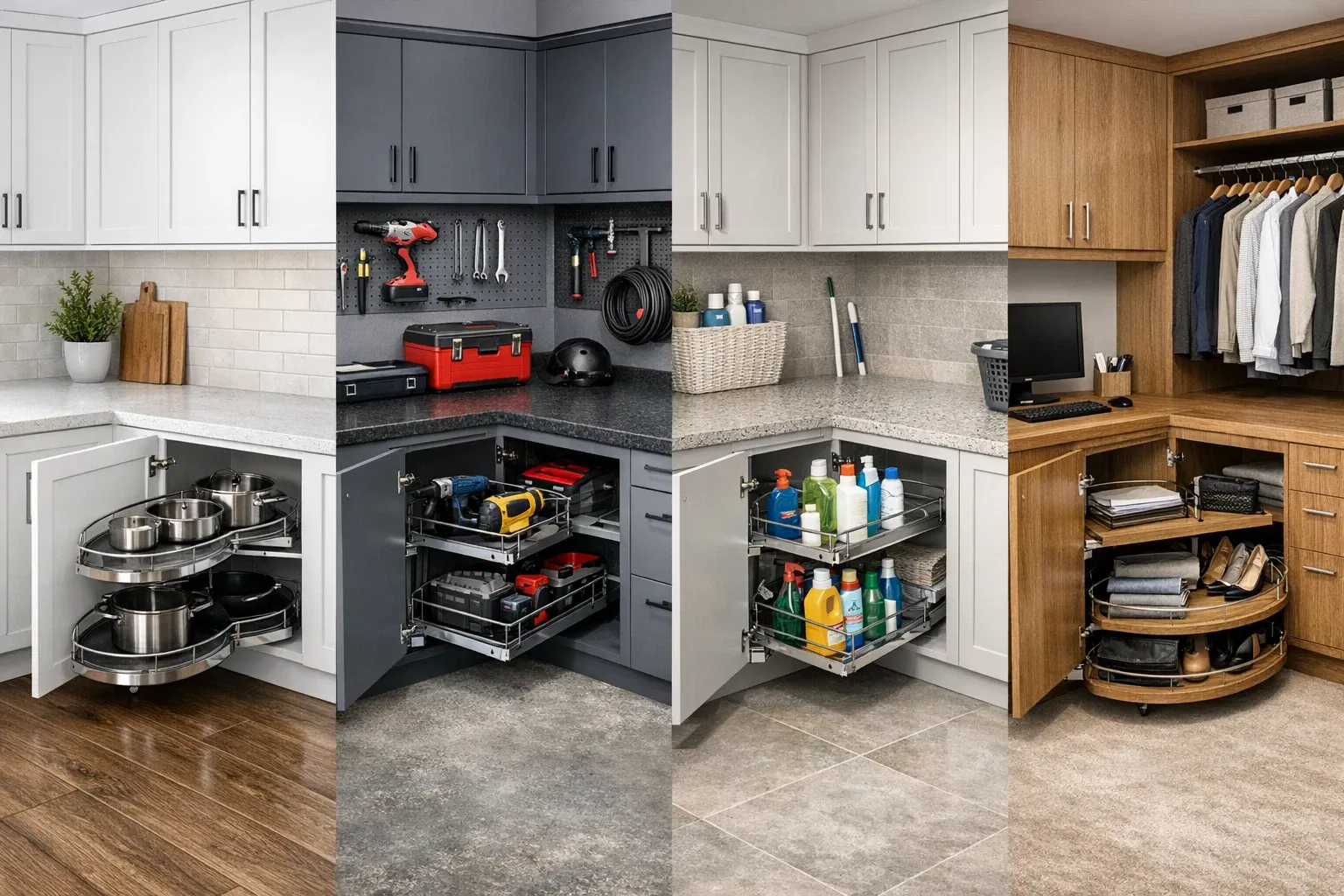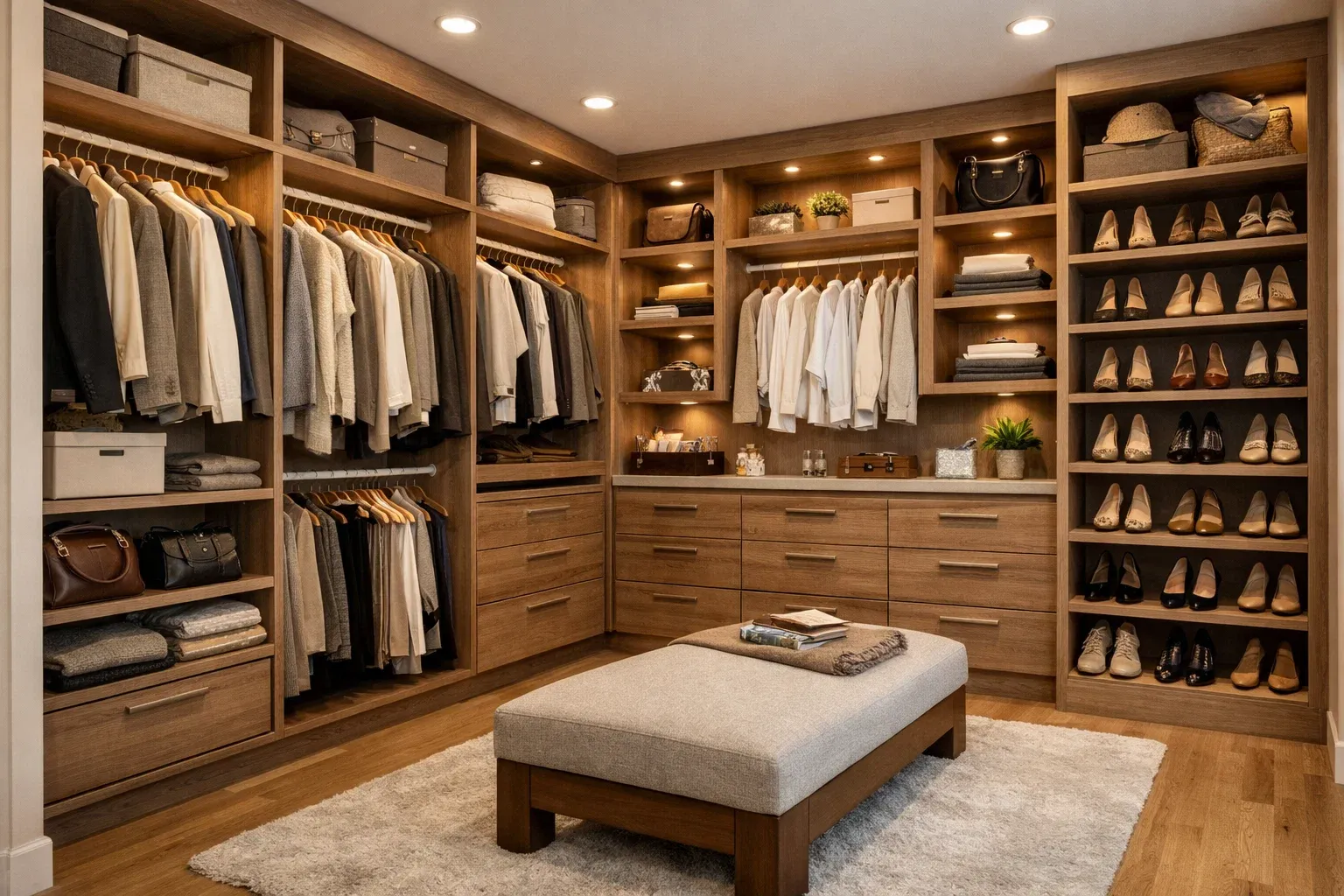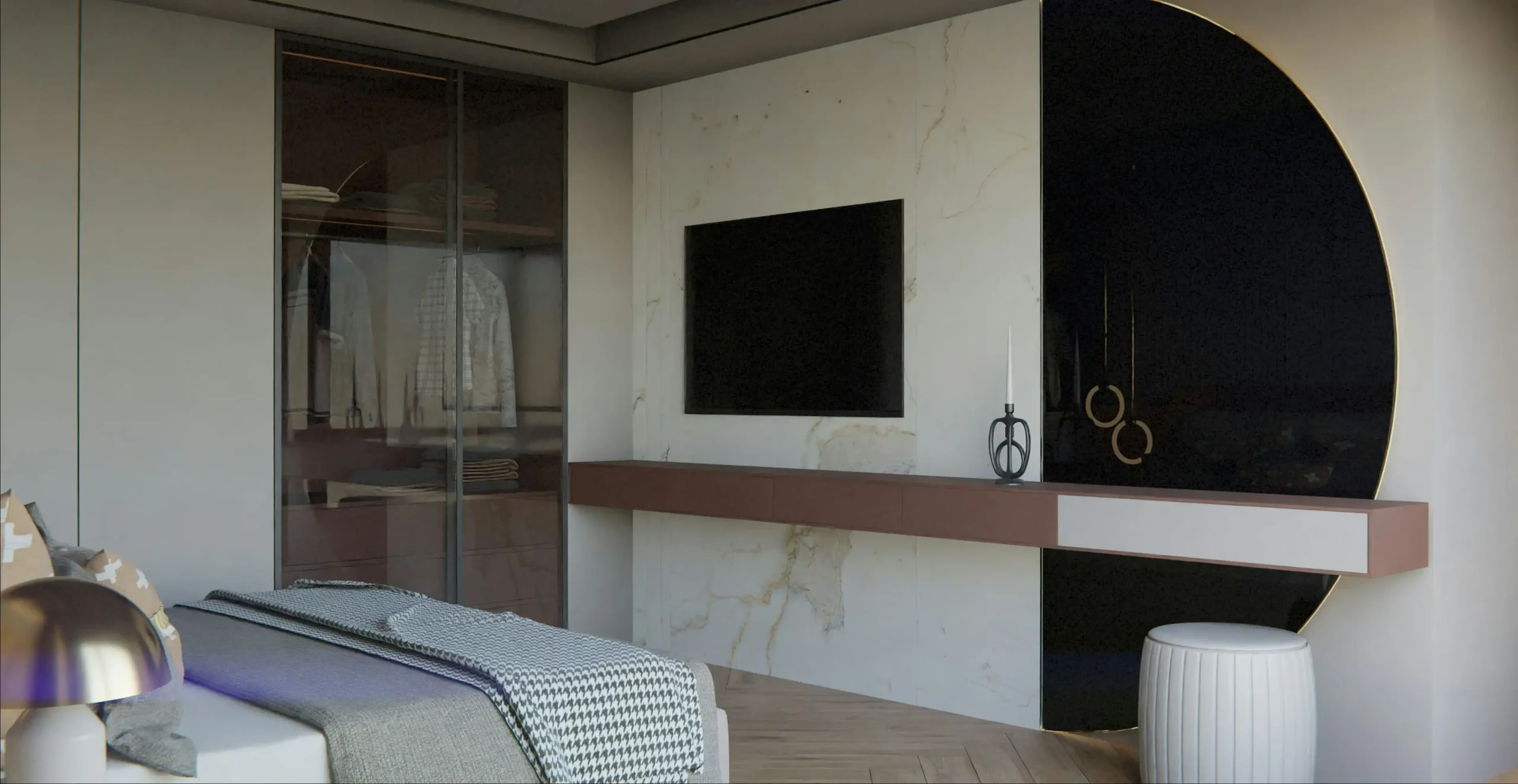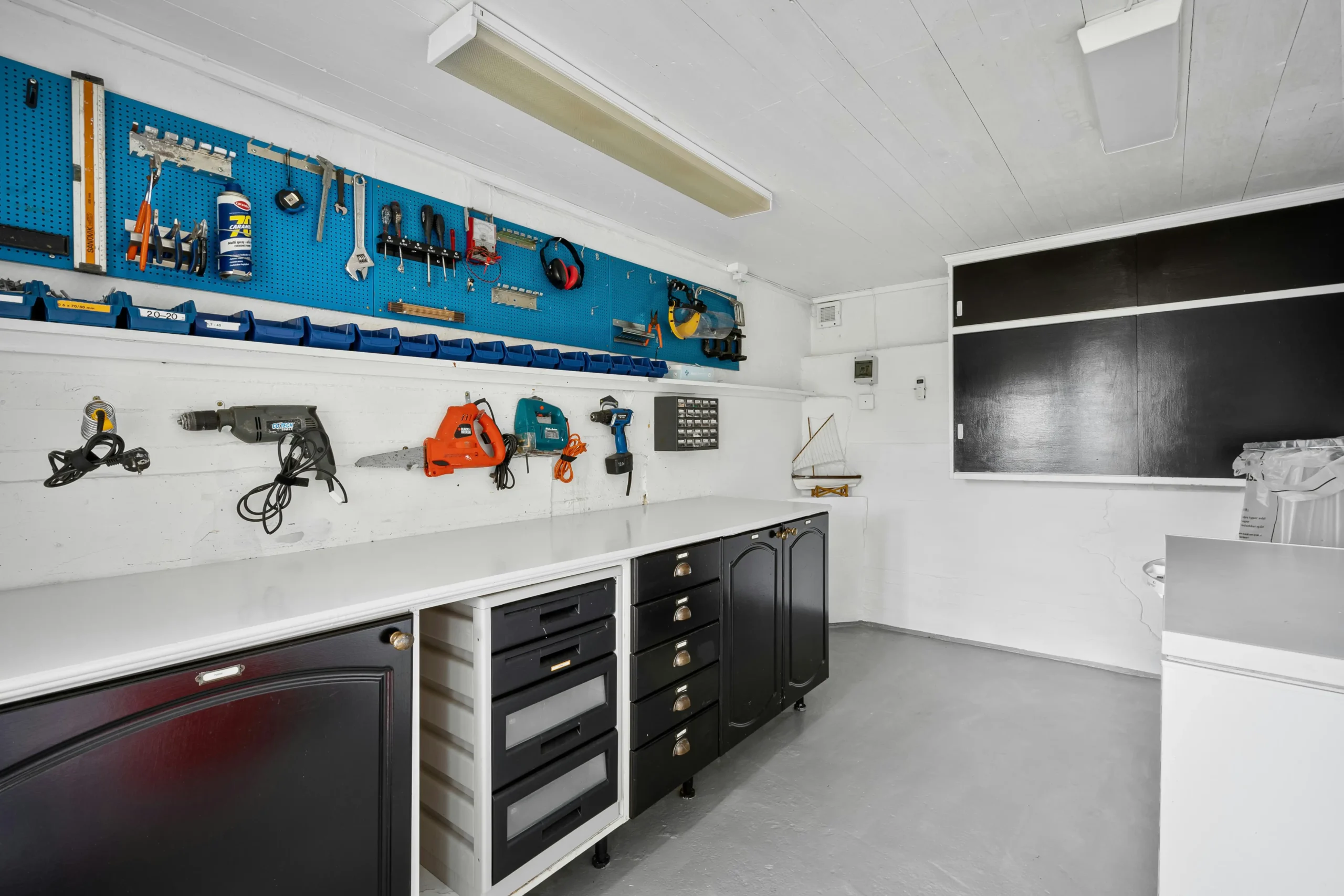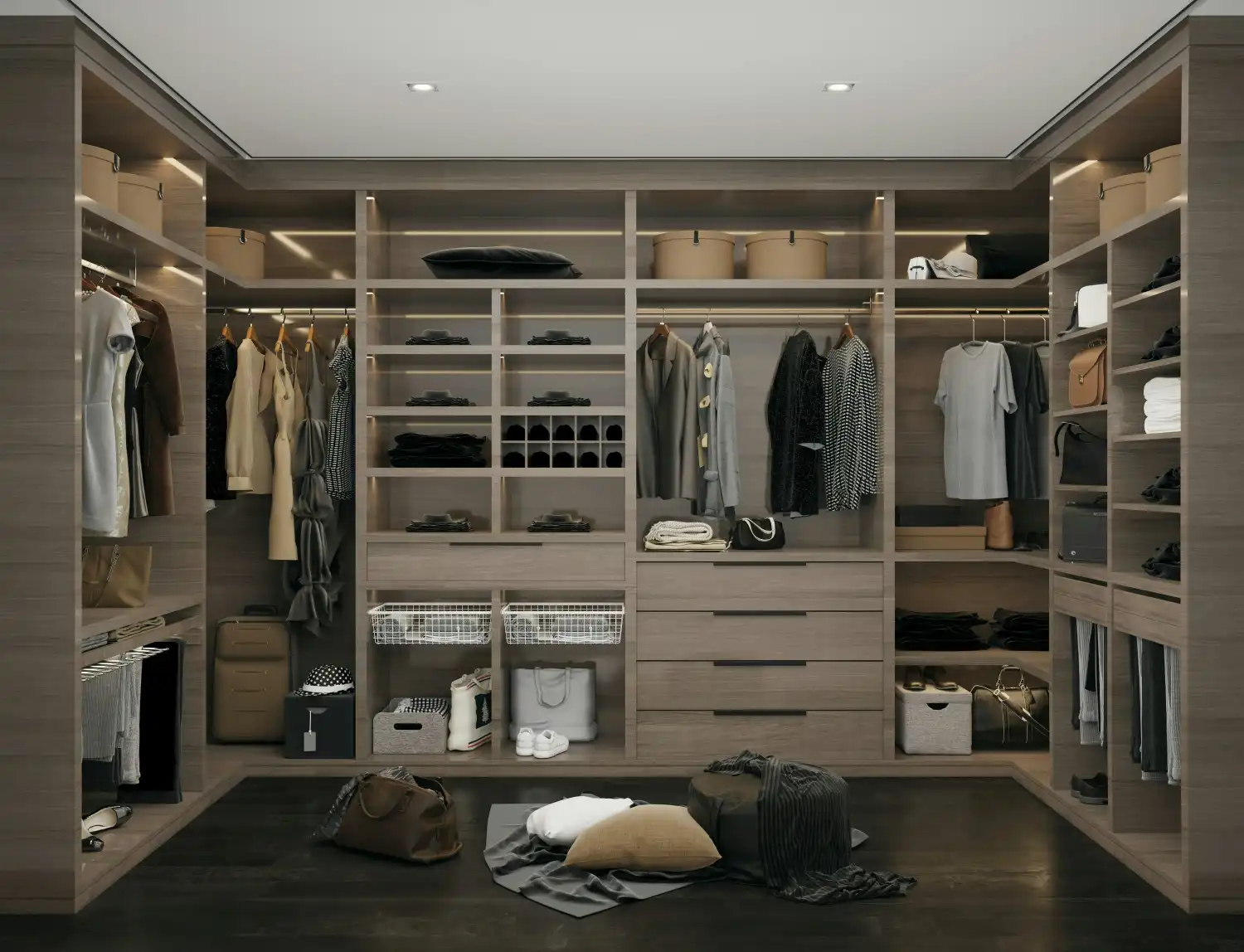
Ultra photorealistic composite interior scene showing blind corner base cabinets

What Are Blind Corner Base Cabinets

Ever stood in your kitchen and wondered why that corner cabinet feels awkward to use? You open the door, reach in, and suddenly half the space feels impossible to access. Kitchen corners often look harmless on a floor plan, just two walls meeting neatly at a 90 degree angle. But in real life, they can turn into wasted space, blocked drawers, or storage you avoid using altogether.

That is where smart planning makes all the difference.

One of the most common solutions designers use is the blind corner cabinet. When designed correctly, it can turn a tricky corner into practical storage. When planned poorly, it can create long term frustration.

If you have been asking yourself what blind corner base cabinets are and whether they are the right fit for your kitchen, this guide explains everything in simple terms so you can design with clarity, avoid common mistakes, and make confident decisions with the help of a reliable custom cabinetry service.

Understanding the Purpose of a Blind Corner Cabinet

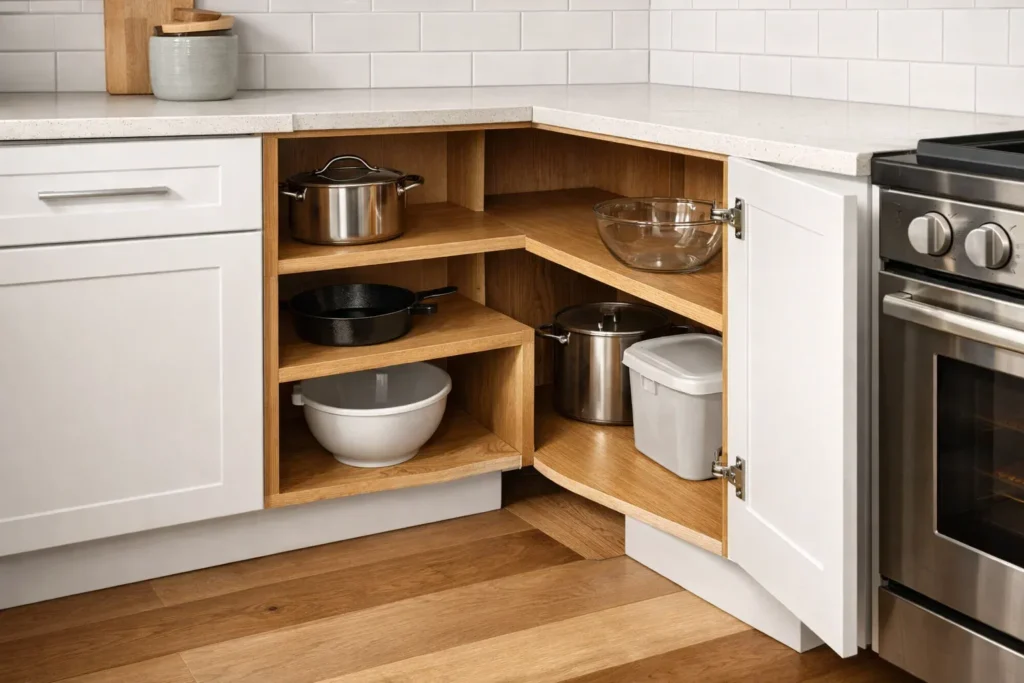
Cutaway view of a blind corner base cabinet inside a modern kitchen.

A blind corner cabinet is a type of corner base kitchen cabinet installed where two cabinet runs meet at a 90 degree angle. Instead of using a diagonal front or lazy Susan system, one cabinet extends into the corner while part of it remains hidden behind the adjoining cabinet.

From the front, it looks like a regular base cabinet. Inside, however, the storage extends deeper into the corner.

This design helps maintain a clean cabinet line while maximizing space in tighter layouts.

A properly planned blind corner cabinet layout allows you to use corner space efficiently without disrupting the flow of your kitchen.

Why Pull Is Critical in Corner Cabinet Planning

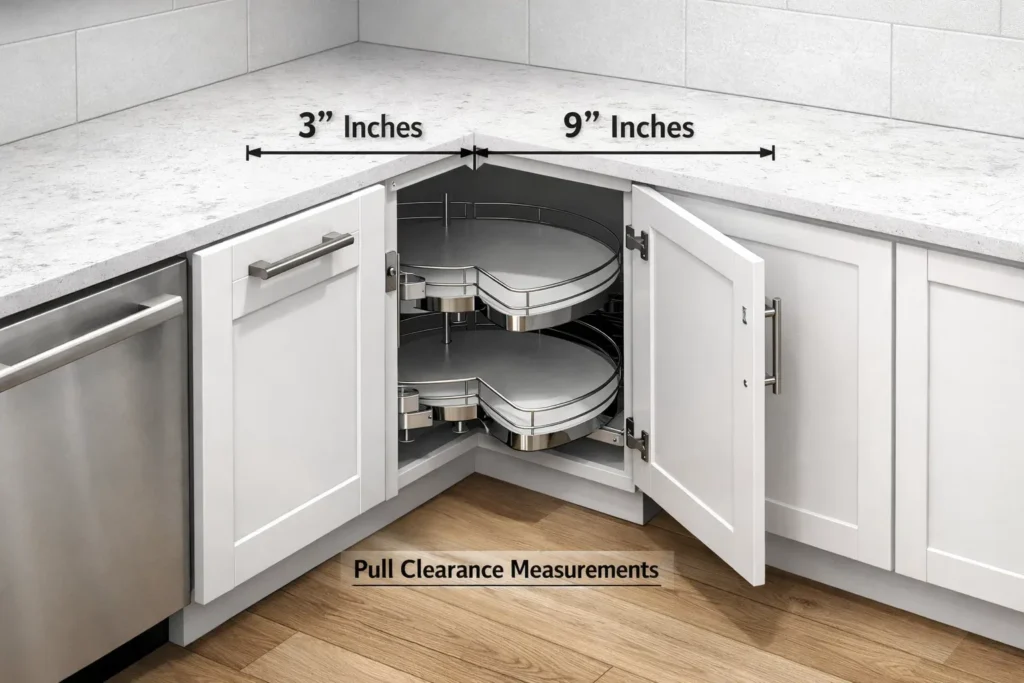
Technical visualization of a blind corner cabinet showing pull spacing measurement

One of the most important terms in blind cabinet design is pull.

Pull refers to how far the cabinet must be offset from the adjacent wall to allow proper opening of doors and drawers.

  • A minimum pull blind corner cabinet usually requires around 3 inches
  • A maximum pull blind corner cabinet may require up to 9 inches depending on hardware and configuration

Without proper pull spacing, the blind corner cabinet door swing can interfere with nearby drawers or appliances.

When planning a corner base kitchen cabinet, ignoring pull measurements is one of the most common and costly mistakes.

Clearance: The Detail That Protects Functionality

Beyond pull, blind corner cabinet clearance ensures that doors open fully and adjacent cabinets function smoothly.

You must consider:

  • Blind corner cabinet door clearance
  • Appliance handle spacing
  • Drawer extension range
  • Walkway clearance

Poor kitchen blind corner design can cause daily frustration, especially in high traffic kitchens.

Planning clearance correctly keeps your layout efficient and comfortable.

Breaking Down Corner Base Cabinet Dimensions

Getting corner base cabinet dimensions right is essential before placing an order.

Typical blind base cabinet measurements include:

  • Blind corner cabinet depth: 24 inches
  • Blind corner cabinet height: 34.5 inches before countertop
  • Blind corner cabinet sizes: Commonly 36, 42, or 48 inches wide

However, true corner base cabinet dimensions depend on:

  • Wall length
  • Required filler spacing
  • Adjacent cabinet configuration
  • Pull measurement

Incorrect dimensions can misalign your entire cabinet run. Professional planning ensures proper spacing and alignment.

Managing Dead Space the Smart Way

One concern homeowners often have is blind corner cabinet dead space.

Because part of the cabinet extends behind another cabinet, access can feel limited.

However, modern storage solutions can transform that hidden section into highly usable space.

With smart organization, a blind corner cabinet becomes practical rather than frustrating.

Functional Corner Base Cabinet Ideas That Improve Storage

Today’s hardware systems have improved blind cabinets significantly.

Here are practical ideas:

  • Pull out tray systems
  • Swing out shelving units
  • Sliding organizers
  • Custom interior dividers

These solutions make deep storage accessible and reduce wasted space.

They are especially helpful in a blind corner cabinet for small kitchens, where efficient storage is essential.

The same principles also apply to garage cabinetry, where maximizing tool and equipment storage is equally important.

The Role of Fillers and Structural Details

In most installations, a blind corner cabinet filler is required.

This narrow strip allows:

  • Proper door opening
  • Drawer clearance
  • Balanced cabinet spacing

Some cabinets also include a blind corner cabinet stile, which reinforces structure and improves door alignment. Skipping fillers is one of the most common installation errors.

Wall Space Requirements You Should Know

Adequate blind corner cabinet wall space is necessary for functionality.

  • 36 to 48 inches on one wall
  • At least 24 inches on the adjoining wall

Exact requirements depend on selected cabinet dimensions and pull configuration. If space is tight, accurate planning becomes even more important.

Blind Corner Cabinet Cost Considerations

The blind corner cabinet price depends on:

  • Material quality
  • Stock vs custom construction
  • Hardware upgrades
  • Finish type

Stock cabinets may seem affordable, but custom built cabinets offer better precision and improved long term performance.

Design It Right the First Time With Expert Guidance

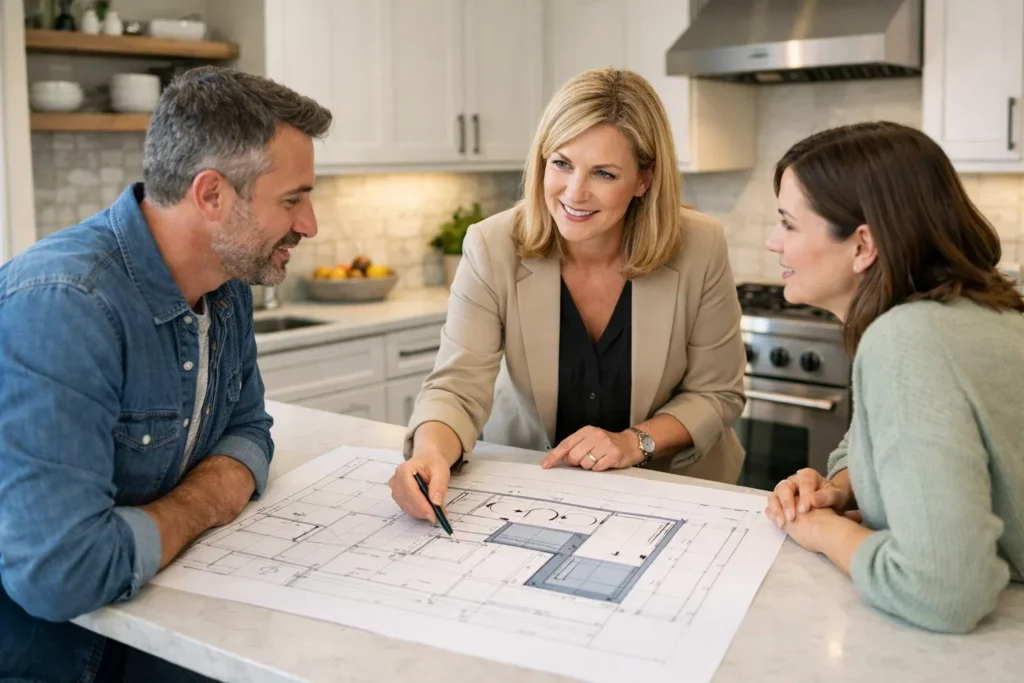
Professional kitchen designer discussing blind corner cabinet layout with homeowners

Choosing the right corner base kitchen cabinet is not just about fitting something into a 90 degree space. It is about making sure your kitchen works properly for years to come. Understanding blind corner base cabinets is the first step. Planning it correctly protects your investment.

At Knudson Cabinetry, homeowners receive guidance through smart layout decisions that help prevent wasted space, clearance issues, and installation mistakes. Whether remodeling or designing a new kitchen, expert support helps ensure the right solution for your storage needs and functionality.

Professional custom cabinetry makers can help you choose the best option for your layout.

When Is a Blind Corner Cabinet the Right Choice

  • You want a continuous cabinet run
  • Space is limited
  • You prefer a traditional layout
  • You need flexibility in adjacent cabinet placement

With proper planning, a blind corner cabinet becomes one of the most efficient storage solutions in your kitchen.

The key is understanding measurements, pull, clearance, and layout compatibility before installation.

FAQs

What is a blind corner base cabinet

A blind corner base cabinet is a corner cabinet where part of the storage extends into the corner and remains partially hidden behind an adjoining cabinet.

How much space does a blind corner cabinet need

It typically requires 36 to 48 inches on one wall and at least 24 inches on the adjacent wall, depending on layout.

What does pull mean in a blind corner cabinet

Pull refers to the spacing needed between the cabinet and wall to allow proper door and drawer operation.

What is the minimum and maximum pull for a blind corner cabinet

Minimum pull is usually around 3 inches, while maximum pull can extend up to 9 inches depending on design.

Do blind corner cabinets require a filler strip

Yes, most installations require a filler strip to allow proper clearance and smooth operation.

How deep is a blind corner base cabinet

Standard depth is typically 24 inches.

What are common mistakes when installing a blind corner cabinet

Common mistakes include ignoring pull spacing, incorrect measurements, and skipping filler strips.

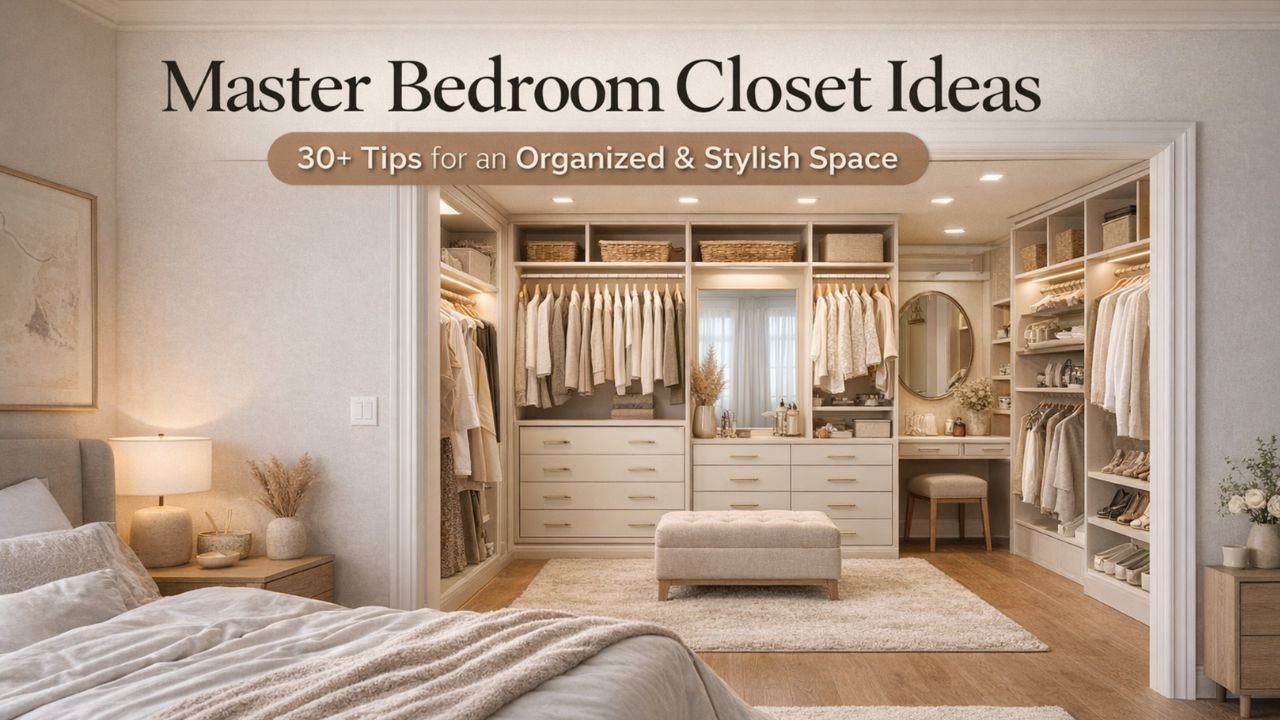
modern walk-in closet with organized shelves, drawers, and hanging space

How Much Does a Custom Closet Cost?

If you’ve ever struggled with cluttered shelves, overflowing drawers, or wasted closet space, you are not alone. Many homeowners reach a point where they start thinking about a custom closet. A custom closet is more than just storage. It can bring peace of mind and make daily routines easier.

One of the most common questions is simple. What is the custom closet cost? The answer is not one fixed number. Prices vary depending on the size of the closet, the materials used, the features you choose, and the installation process. Knowing these details helps you plan your budget and avoid surprises. By the end of this guide, you will understand custom closet prices, what affects them, and how to make smart choices.

Average Custom Closet Cost

Many homeowners want to know the typical price range first. Custom closets can cost anywhere from $1,000 to more than $10,000. The price depends on the type of closet and the features you want. Here is a basic breakdown:

  • Basic reach-in closet: $1,000 to $3,000
  • Mid-range custom storage system: $3,000 to $6,000
  • Luxury walk-in closet: $7,000 to $15,000 or more

Pricing varies widely. Your customization choices will have the biggest impact. Homeowners often compare closet costs with their storage needs before deciding.

Closet Type and Its Effect on Cost

The type of closet you choose changes the cost significantly.

Walk-In Closet Cost

Walk-in closets usually cost more. They require extra shelving, drawers, lighting, and sometimes a seating area. They often function as a mini dressing room. This increases the overall price.

Reach-In Closet Cost

Reach-in closets are more affordable. The structure usually already exists and requires fewer materials. Many homeowners choose this type to improve organization without a full renovation.

Built-In vs Freestanding Closets

Built-in closets cost more because they are permanently installed and custom fitted. Freestanding closets are more budget-friendly but may not integrate as seamlessly with your home. Understanding these differences helps you estimate costs more accurately.

Factors That Affect Custom Closet Prices

Several elements influence how much your custom closet will cost.

1. Materials Used

Material choice has a large impact on cost. Options include:

  • Laminate, which is budget-friendly
  • Wood veneer, which is mid-range
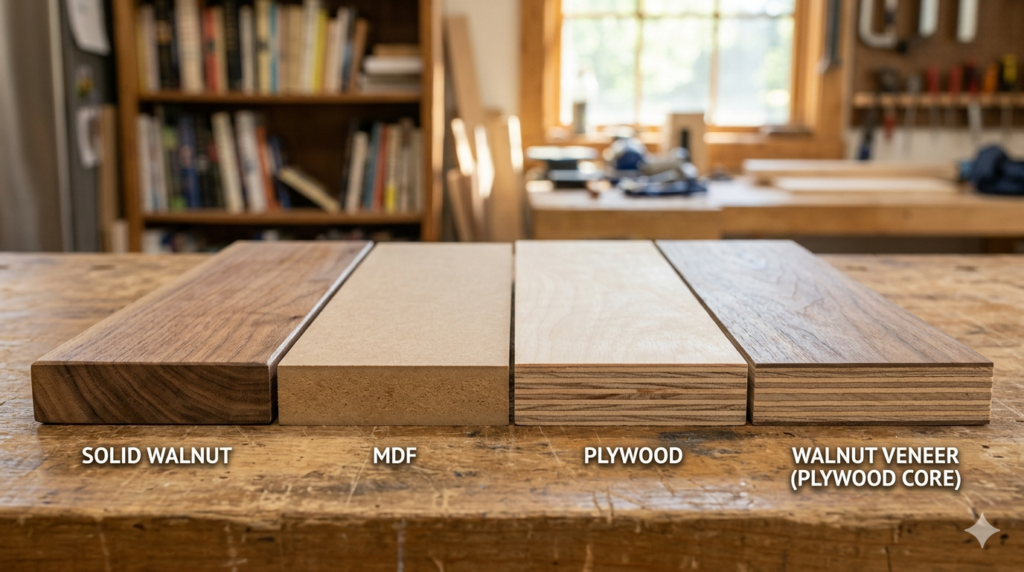
  • Solid wood, which is premium

2. Design Complexity

The more features you add, the higher the cost. Features can include:

  • Shoe racks
  • Pull-out drawers
  • Jewelry organizers
  • Built-in lighting

Each addition increases the total price.

3. Labor and Installation

Professional installation ensures durability and proper alignment. Labor costs usually range from $300 to $2,000 depending on complexity.

Location Matters

Where you live also affects the cost. For example:

  • Big Sky, Montana, custom closets are often higher due to luxury home demand
  • Telluride, Colorado, pricing reflects premium materials and labor
  • Jackson, Wyoming, is influenced by high-end mountain properties
  • Sun Valley, Idaho, varies with seasonal construction demand
  • Victor, Idaho, may have slightly lower labor costs
  • Park City, Utah, tends to be higher due to upscale housing markets

Comparing regional prices helps you estimate costs more realistically.

Is a Custom Closet Worth the Investment?

Some homeowners hesitate because of the upfront cost. However, the benefits often outweigh the expense. A well-designed closet can:

  • Maximize storage space
  • Reduce clutter
  • Improve daily routines
  • Add resale value

Real estate experts agree that professionally designed closets increase buyer appeal. Custom closet prices can be seen as a smart investment.

Tips to Reduce Cost Without Sacrificing Quality

You can control costs with a few strategies:

  • Choose laminate instead of solid wood
  • Limit custom accessories at first
  • Install your closet in phases
  • Keep existing structures when possible

Working with experienced custom cabinetry makers can help you find affordable solutions while keeping quality high.

Why Professional Design Matters

DIY systems may seem cheaper at first but can lack durability and efficiency. Professionals ensure:

  • A perfect fit for your space
  • Long-lasting materials
  • Smart organization planning
  • Higher resale value

Professional custom closets services can make a big difference in overall cost and long-term satisfaction.

Choosing the Right Custom Cabinetry Partner

Planning a custom closet project requires the right partner. Knudson Cabinetry can help you:

  • Plan within your budget
  • Select durable materials
  • Optimize your storage layout
  • Avoid costly mistakes

Their guidance ensures your custom closet delivers maximum value and meets your vision.

FAQs About Custom Closet Cost

How much does a custom closet cost?

Most projects range from $1,000 to $10,000 depending on size and features.

What is the average cost of a custom closet?

Typically between $3,000 and $6,000.

How much does a custom closet cost per linear foot?

Usually between $150 and $500 per linear foot.

Are custom closets expensive?

They can be, but prices vary widely depending on materials and customization.

Is a custom closet worth the cost?

Yes. It improves organization and increases home value.

What is the cheapest way to build a custom closet?

Using laminate materials and fewer accessories reduces costs.

How much does labor cost for a custom closet installation?

Labor typically ranges from $300 to $2,000.

What factors affect custom closet pricing the most?

Materials, size, features, and installation complexity.

How long does it take to install a custom closet?

Most installations take 1 to 3 days.

Do custom closets add value to a home?

Yes. They increase buyer appeal and resale potential.

What materials are used in custom closets?

Common options include laminate, MDF, wood veneer, and solid wood.

modern bedroom featuring a sleek built-in wall unit design.

10 Modern Built-In TV Wall Unit Designs to Transform Your Living Room

It’s a known fact that the living room is the most used space in the house and holds cherished memories of both celebrations and gatherings. A modern living room without a modified TV makes little sense. Hence, there is an increasing number of families in every part of the world shifting towards the remarkable designs of built-in wall TV units.

That’s why more homeowners are turning to modern built-in TV wall unit designs for living rooms that are both stylish and functional. For impact and functionality purposes, the variety of multi-functional to floating wall TV units of 2026 has been carved to a total of 10 built-in TV wall unit ideas in designs up for your review. No matter the size of your living room, from small spaces to open areas, the designs aim to elevate the aesthetic of your living space to a more contemporary, sophisticated, and cozy one, one that always makes you feel at home.

Floating TV Wall Units for a Sleek, Contemporary Look

Contemporary or classic-designed homes often have a touch of minimalism. If you prefer the low-key decorating style, wall-mounted TV stands are the right choice for maximum impact. These modern built-in TV wall unit designs help you make the most of your living room without leaving the floor looking over-designed.

For small modern built-in TV wall unit designs, floating shelves and cabinets are especially effective. In multi-floor buildings, seats are located in one area while coffee tables are placed high.

Built-In TV Cabinets with Doors – For Tidying Clutter

If you have an eye for a smooth, systematic, and clutter-free living room, a built-in TV cabinet with doors would blend perfectly with your vision. They work perfectly and help in keeping your TV, as well as other electronic screens, tucked away from the eye when not in use, converting your living room into a satisfying and peaceful clutter breakdown.

Gliding glass doors, sliding panels, or solid wood doors can also be used as a build, or the units can conceal the screen. For the people with the minds of less is more, the built-in TV cabinet can also become one of the units in your house, which will add something as useful to the home as it is to the eye. For those looking for high-quality designs, working with professional custom cabinetry contractors ensures your built-in cabinets are both functional and stylish.

Floor-to-Ceiling Built-In TV Wall Cabinet Layouts in Modern Design

Homeowners who are interested in showing off their lifestyle and displaying their items will enjoy a floor-to-ceiling system. These modern built-in TV wall unit designs harmoniously blend modern shelving, TV wall units, and display cases.

For functionality, modern style, and clean lines of furniture, mix open shelves with concealed storage. It is beautiful because the accentuations are on show while the cables and gadgets are away from everyone’s view.

Personalized Built-In TV Wall Units with Modern Details

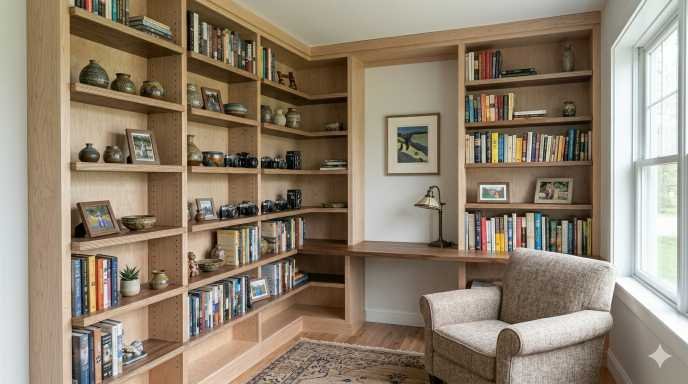
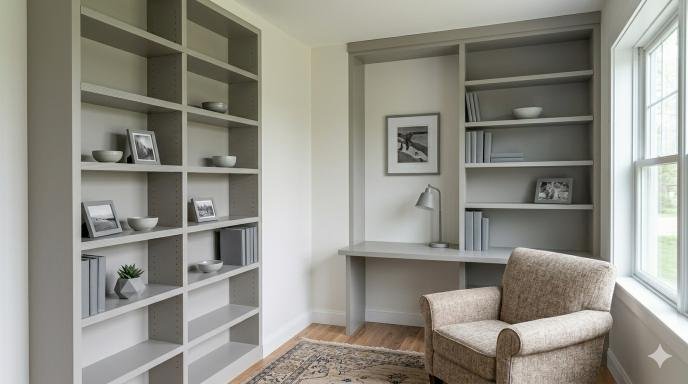
Specifically in the living room area, the built-in TV wall unit ideas with ample storage have reached a new height of admiration. One can entirely customize the elegance of the walls with their own version of custom library walls, media walls, book shelving, and console units.

This renowned company has a lot to offer. It is capable of surprising even the most meticulous customers with a variety of built-in wall units. Those of Knudson Cabinetry can bring the customer’s artistic vision to life like no other.

Small Modern Built-In TV Wall Unit Designs That Maximize Space

es, even small living rooms can benefit from built-in TV wall units. With a sensible consideration of a few key steps, you can make a properly-sized small modern built-in TV wall unit fit a small living room.

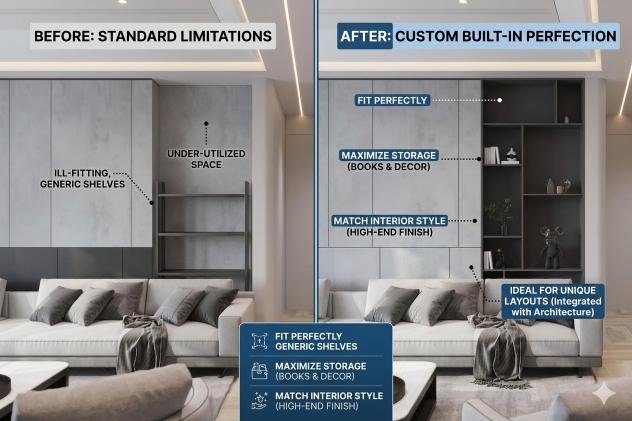
To capitalize on space, consider opting for tables and innovative furniture pieces that come in a straight line with the wall units. This creates a layer and an impression of a bigger living room. Blending such ideas with a white color scheme above the grey color for furniture and walls, and a calming light provides a bigger and brighter form of a combined room. If you’re looking for more ways to integrate furniture seamlessly into your space, built-in furniture offers perfect solutions for optimizing space while enhancing your living room’s aesthetic.

Built-In TV Wall Cabinets for Multi-Purpose Room

The built-in TV cabinet wall in a living room has excellent versatility. You may have a little space and be sure that in one structure, you can get all the practical books to show multimedia sound systems, to even a gathering with a book display, to even a sound system.

With built-in TV wall ideas in your living room, combine closed cabinets, hidden compartments, and open shelving allows one to even include a sound system and display for books to even a sound system which makes the TV cabinet walls very practical and stylish to look at.

Bold Accent Walls for Statement-Making Designs

To put a creative accent on your stone-walled room, you can color the TV wall with several other colors, using trendy matte black furniture to top it all off. Splaying the TV in front of stone, wood, or matte black concrete brilliantly contrasts while toning down the too-structured room.

Good cabinet designs with impactful TV wall unit ideas do the job. Sliding them next to a bold accent wall and keeping the TV nearby, supported elegantly, gives fresh expression to the living room, away from being too sophisticated.

Open Shelving Systems in a Modern, Updated Style

If traditional storage units are not your favorite, try installing open shelving around your built-in TV system. Its minimalist feel supports decorative items, plants, and pictures you’d like to have to maintain a sleek look.

Built-in TV wall unit ideas are best for these shelving systems, especially in small rooms, in which they open up the space.

Multi-Functional Built-In TV Cabinet Ideas

Innovative built-in tv cabinet ideas eliminate the usual clutter in a modern home while also improving technology and financial resource management via hidden study space, innovative charging solutions, advanced software integration, space-saving desk, and advanced audio in furniture.

Fireplaces, Comfort Spaces and TV Combos

Another sought-after modern TV wall unit design for living rooms includes a television installed near a fireplace. This design has become incredibly popular for modern living rooms as it adds a level of luxury, warmth, and coziness to the room that would normally be missing.

It is a part of the living room, and it is considered a separate, warmer place. Built-in room has higher standards and a higher need. Compared to the closed proteins, the Ethanol and Electric fireplaces have really useful features. They pair with family and enable them to watch movies with warm outside, warm inside, and warm cold air outside.

Final Thoughts:

Your living room can have more than the mundane TV stands. It can be accentuated with a modern entertainment hub that serves its purpose and provides style. From custom-built TV units to small yet customized compartments, the 10 modern built-in TV wall unit designs serve different and distinctive purposes, which bring your living room to life.

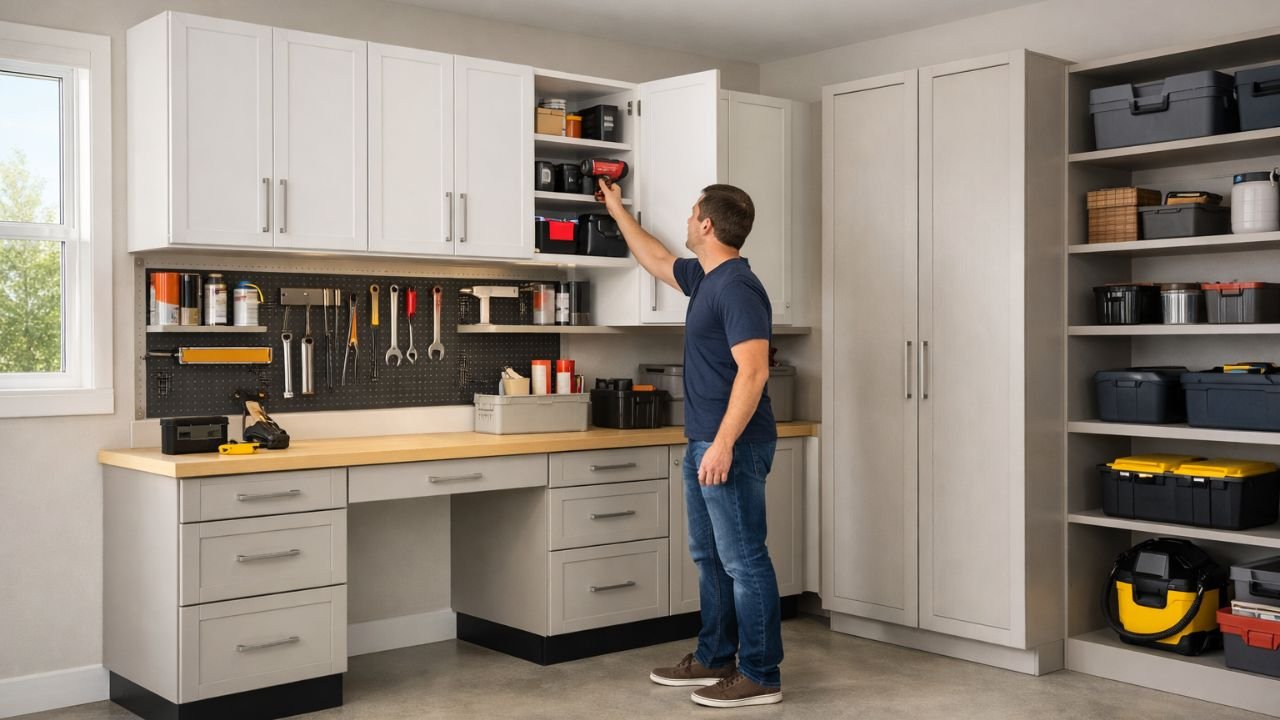
Top 10 Garage Cabinet Ideas to Maximize Your Storage Space

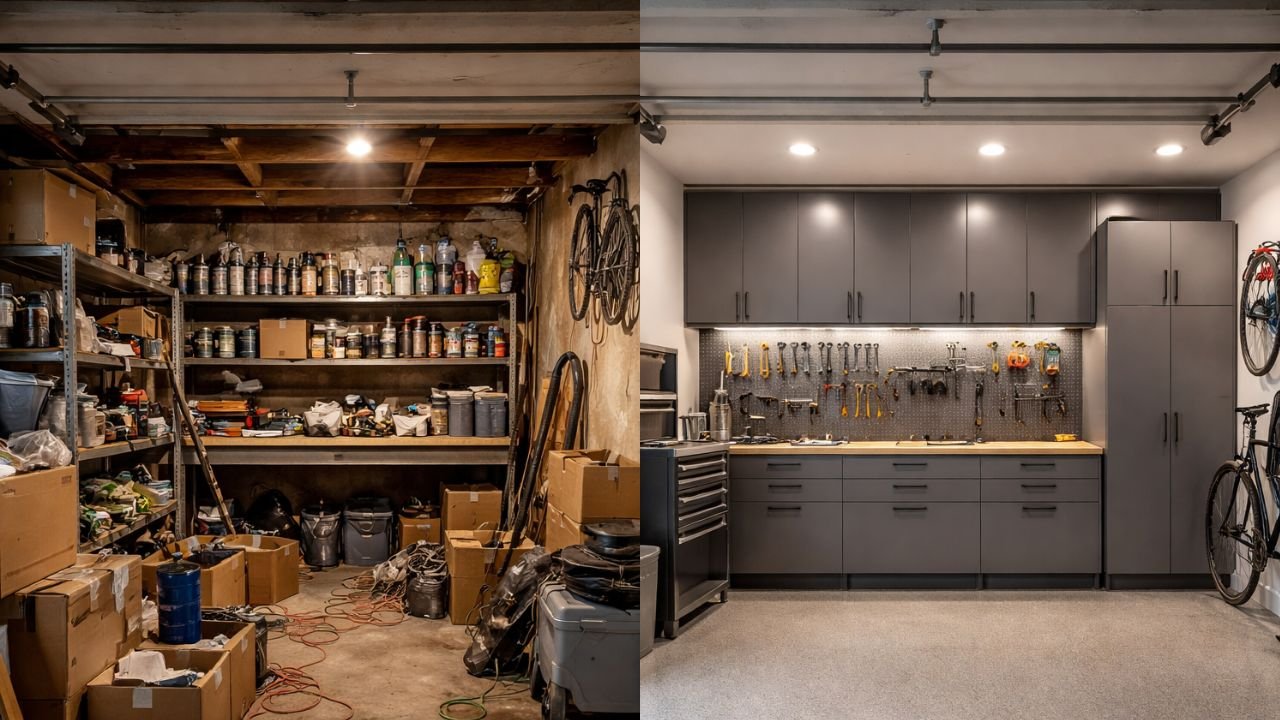
A cluttered garage is something almost every homeowner deals with at some point. Between tools, sports gear, seasonal items, and bulky equipment, it doesn’t take long for the space to feel overwhelming. The good news? With the right garage cabinet ideas, you can turn even the messiest garage into a clean, functional, and stylish part of your home.

Whether you’re dealing with limited square footage or simply want a more organized lifestyle, these garage cabinets ideas are all about practicality, design, and maximizing every inch of space.

Let’s explore ten smart solutions that can transform your garage into a place you enjoy stepping into, not one you avoid.

Best 10 Garage Cabinet Ideas to Level Up Your Garage Space and Look

1. Tall Garage Cabinets for Maximum Vertical Storage

If your garage floor is constantly crowded, tall cabinets are one of the best garage cabinet ideas to reclaim space. By going vertical, you instantly multiply your storage capacity without affecting walking room.

Tall cabinets work well for:

  • Storing sports equipment
  • Keeping cleaning supplies safe from kids
  • Organizing extra pantry or household items

This idea also helps maintain a clean look since everything stays behind closed doors—perfect for anyone who prefers a neat, minimalist setup.

2. Heavy-Duty Metal Cabinets for Tool Lovers

If you’re someone who enjoys working with tools, metal cabinets solve a huge problem: durability and security. They hold heavier items, resist dents, and offer a professional workshop look.

Pair these with pegboards or a garage slatwall system so your most-used tools stay visible and within reach. It’s an ideal setup for hobbyists, DIYers, and weekend warriors looking for smarter garage cabinet ideas and tool storage solutions.

3. Wall-Mounted Cabinets to Free Up Floor Space

Wall-mounted cabinets are great for homeowners who want to keep the garage spacious and accessible. These cabinets sit higher on the wall, making room for bikes, bins, or even rolling tool chests below.

Wall-mounting also works well with:

  • Garage shelving solutions
  • Overhead garage storage
  • Small or narrow garages

This combination creates a polished, layered look while keeping clutter away from the ground.

4. Modular Garage Cabinets You Can Rearrange Anytime

Modular cabinets offer flexibility—something many families need. As your lifestyle changes, so can your setup. You can move sections around, add extra storage later, or swap out components without starting from scratch.

This is one of the top garage cabinets ideas for:

  • Growing families
  • Changing hobbies
  • Seasonal gear
  • Homeowners who love customizing their space

Modular layouts allow you to build the perfect garage without committing to a single fixed arrangement.

5. Overhead Storage Cabinets for Bulky Items

Overhead cabinets solve the classic garage struggle: where to put the big stuff. Holiday décor, camping gear, and rarely used items can all live above the ground.

Pairing cabinets with motorized bike storage or ceiling racks adds even more efficiency, especially if you want a garage that feels open rather than cramped. Plus, overhead cabinets free up wall space for other garage storage cabinet ideas like workstations or tool walls.

6. Custom Garage Storage for a Perfect Fit

For homeowners who want a clean, cohesive, and built-in look, custom garage storage is the way to go. Custom solutions take into account your exact measurements, storage needs, and style.

They are especially helpful when:

  • Your garage has awkward corners
  • You need cabinets tailored to oversized tools
  • You want max storage without sacrificing design

You can explore our beautiful custom garage cabinets design to help your garage feel like a real extension of your home, rather than just a place to park the car.

7. Workstation Cabinets for DIY Projects

If you enjoy woodworking, crafting, or home repairs, a workstation cabinet setup is a game changer. These systems usually include a countertop, drawers, and shelves, everything needed to keep your workspace functional and tidy.

Add a durable top and combine it with:

  • Task lighting
  • A tool wall
  • Small parts bins
  • DIY garage cabinets you build yourself

Not only does this enhance organization, but it also makes your projects more enjoyable.

8. Open Shelving + Cabinets for a Balanced Look

A mix of open shelving and closed cabinets gives you the best of both worlds. Closed cabinets hide clutter, while open shelves provide easy access to items you use regularly.

This combination is popular for:

  • Paint cans
  • Toolboxes
  • Gardening supplies
  • Auto care products

It’s also one of the most visually appealing garage design ideas, making the space feel intentional and well-structured.

9. Adding Flooring & Cabinet Combos for a Cohesive Look

Believe it or not, flooring plays a big role in how organized your garage feels. Options like garage floor coatings or Swisstrax flooring instantly elevate the room’s appearance.

Pairing flooring with the right cabinets creates a seamless, finished look that brings value to your home. Matching color palettes or textures can tie everything together, making the garage feel like a professional workspace.

10. Cabinets with Built-In Safety Features

For households with kids or pets, safety-focused cabinets are one of the smartest garage cabinet ideas. Features like locking drawers, reinforced doors, and chemical-safe compartments protect your family while keeping dangerous items out of reach.

These are ideal for storing:

  • Automotive fluids
  • Fertilizers
  • Paints and solvents
  • Sharp tools

Smart cabinet choices help you stay organized while keeping the garage a safe part of the home.

How Knudson Cabinetry Helps Bring Your Garage Vision to Life

When you’re ready to go beyond basic storage and want something tailored to your lifestyle, Knudson Cabinetry can help turn your ideas into a garage that truly works for you. Our team focuses on building custom garage cabinets that blend strength, style, and practical design, so every inch of your space is used intentionally.

Instead of settling for generic shelving or mismatched storage, you get cabinetry crafted to fit your tools, your hobbies, and the flow of your daily routine. Whether you need tall cabinets for sports gear, a workstation for weekend projects, or a full wall system that brings order to the chaos, Knudson Cabinetry creates solutions that match your home and the way you live. It’s the kind of upgrade that adds long-term value and transforms your garage into a space you actually enjoy using.

Final Thoughts

With the right garage cabinet ideas, you can turn your garage into a space that works for you—not against you. Whether you prefer DIY solutions, custom builds, or modular options, the key is designing a system that fits your routines and makes your home feel calmer and more efficient.

Modern custom closet with shelves, hanging spaces, and storage boxes.

Custom Closets vs. Ready-Made Closets: Which Is Right for You?

If your mornings start with hanger jams, missing shoes, and a closet that never quite fits your life, you’re not alone. The decision between Custom Closets vs. Ready-Made Closets isn’t just about looks—it’s about space, time, budget, and daily ease. 

This guide offers a practical wardrobe comparison so you can choose confidently, whether you favor the speed of ready-made wardrobes or the precision of custom wardrobes tailored to your home.

The Core Difference (Form vs. Fit)

Think of ready-made wardrobes as a standardized solution: fast to buy, simple to assemble, and sized to standard widths and heights. They’re ideal when you need storage now and can accept a near fit. By contrast, custom wardrobes are designed around your exact measurements, habits, and architecture—sloped ceilings, alcoves, odd bump-outs, the works. In other words, Custom Closets vs. Ready-Made Closets often comes down to whether you’ll adapt to the unit or the unit will adapt to you. For a clean, apples-to-apples wardrobe comparison, ask: “Who is compromising—me or the closet?”

  • Choose ready-made wardrobes if you’re renting, on a tight timeline, or your space is standard.
  • Choose custom wardrobes if storage must solve real constraints—tiny rooms, shared closets, or specialty collections (athleisure, tall boots, suits).

Space Utilization & Daily Flow

Ready-to-buy systems are modular, but gaps are common—top voids, side slivers, or shallow corners where dust collects. Built-in furniture and fully built-in closets eliminate that waste, maximizing vertical space with floor-to-ceiling designs, integrated lighting, and made-to-measure drawers. If a five-minute morning matters, custom wardrobes can add valet rods near the door, double-hang where you need it, and deep shelves sized to your folded sweaters—not “close enough,” but right.

When you frame Custom Closets vs. Ready-Made Closets as a wardrobe comparison of minutes saved per day, custom often wins; when measured by hours to assemble, ready-made can be the hero.

Materials, Durability & Fix-Once Design

Many ready-made wardrobes use thin boxes and cam locks that are fine for gentle use but can wobble when overloaded. Premium options exist, yet they’re still constrained by stock parts and limited reinforcements. Custom closets services typically offer stronger carcasses, thicker shelves, full-extension soft-close hardware, and seam-free spans tailored to heavy items. If you’ve had shelves bow or hardware loosen, going custom can be a fix-once solution.

For long-term reliability, Custom closet systems and custom closet cabinetry can be specified with moisture-resistant cores, edge-banding that doesn’t peel, and closet-safe finishes. Over ten years, the “cheap today, replace tomorrow” loop often costs more than building right from the start.

Style, Lighting & Closet Customization

With ready-made wardrobes, you’ll pick from a handful of colors and door styles. That’s perfectly fine for minimalist rooms or guest spaces. If your closet needs to match millwork, echo your door profiles, or host built-in lighting, mirrors, and jewelry trays, custom wardrobes shine. They welcome closet customization: angled shoe shelves, handbag cubbies, pull-out laundry, sliding belt racks, and toe-kick lighting that turns on when you enter.

This is where Custom Closets vs. Ready-Made Closets impacts joy. Ready-made will store things; custom can stage outfits, protect fabrics, and make your closet feel like a boutique.

Cost Reality Check (and How to Budget)

A frank discussion on custom closets vs ready-made closets cost helps avoid surprises. Entry-level, ready-made wardrobes are usually the least expensive option and wonderful for quick wins. Costs rise with extra rails, add-on drawers, and delivery/assembly. Custom wardrobes carry higher upfront costs due to design time, site measurements, fabrication, and professional installation—but they remove dead space and often replace additional dressers or chests you would have bought anyway.

To compare fairly, total everything: units, fillers, trim, lighting, accessories, delivery, assembly/installation, and any wall repairs. In many homes, the complete wardrobe comparison narrows once you add “the little things” to the ready-made.

How Knudson Cabinetry Fits In

If you are inclined to custom but fear spending too much or creating a complicated design, Knudson Cabinetry is the middle ground. Our designers begin with functionality, how you dress, and what you keep, and translate it into smart, custom closet cabinetry. We regularly provide custom closets vs. ready-made closets services that combine the two: custom cores where accuracy is vital, and some ready-made modules in the wardrobe, where speed and savings are key. The outcome is smooth and intimate without going overboard on the budget.

Conclusion: Buy to Fit, Not Hype

Ready-made wardrobes are a great choice when it comes to a quick solution in an ordinary room. Custom wardrobes offer accuracy and confidence in even the trickiest of spaces, heavy and even the boutique-level organization. In case you are still undecided, sketch your room using painter’s tape, count the number of add-ons each path needs, and do a side-by-side wardrobe analysis in terms of cost, time, and everyday experience.

Delicately choose, because it matters: Knudson Cabinetry has the ability to design, construct, and install to the realities of your house, combining custom and custom-designed components with smart off-the-shelf items where it fits your budget. Still, you land on Custom Closets vs. Ready-Made Closets or a considerate blend, they will assist you in transforming the mess into a harmonious and pretty routine you will be glad to follow each and every day.

FAQs

What is the main difference between custom closets and ready-made closets?

Custom is designed to fit into your room and lifestyle; ready-made is mass-produced and fitted to your room. Concisely, Custom Closets vs. Ready-Made Closets is a dilemma between made-to-order design and expedited convenience.

Are custom closets worth the investment?

When space is used on a daily basis and oddly shaped or with complicated storage space, custom wardrobes tend to be well spent in ease every day and in durability.

Do ready-made closets last as long as custom closets?

Quality varies. Ready-made wardrobes of premium quality could last years and years, but when it comes to heavy loads and uneven floors, there is a limit that can be spotted within a few years, compared to well-built custom wardrobes.

Which is more affordable: custom or ready-made closets?

Wardrobes that are usually prefabricated are cheaper at the start. Including fillers, trim, light, and replacement changes, most homeowners will discover that the difference between the total custom closets and the ready-made closets is not as wide as they had imagined.

Can I install a ready-made closet myself?

Yes, but that’s assembly, leveling, and wall anchoring. In high units, safety straps or pro help should be used.

How long does it take to build a custom closet?

Design to install can take up to 2-6 weeks, depending on the length of the project, finishes, and the timing.

Do custom closets add value to a home?

Well-implemented built-in closets may increase the attractiveness of buyers and their appraisal, particularly in main suites.

What factors should I consider before choosing between custom and ready-made closets?

Wall/floor conditions, floor timeline, floor budget, floor load requirements, aesthetics, and will you soon be moving? Answering the question is fast once a quick wardrobe comparison with measures and inventory (what you own) is made.

Garage interior with shelves displaying various tools and objects.

Garage Cabinets vs. Open Shelving: Which Works Best?

If your garage currently looks like a game of Jenga—boxes stacked on paint cans stacked on holiday décor—you’re not alone. The space has to do everything: workshop, mudroom, sports locker, overflow pantry, and even a mini-warehouse for bulk buys. Smart garage storage solves the chaos, but choosing between cabinets and open shelves can feel confusing. In this guide, we’ll compare garage cabinets vs shelving in plain language, share design and durability tips, and help you pick the setup that fits your budget, habits, and home—so you end up with one of the best garage storage systems for your daily life.

What Are The Main Options?

At the highest level, you’re deciding between closed storage vs open storage. Cabinets hide clutter behind doors; shelves keep everything visible and quick to grab. A single garage shelf can be perfect for bins you access weekly, while a full cabinet run protects finishes, power tools, and household chemicals from dust and curious hands.

If you’ve been Google garage shelving vs cabinets, you’ve already seen that both can be great—when matched to the items you store and how often you reach for them. This is the heart of garage cabinets vs shelving: visibility and speed versus protection and polish. Done well, either path can elevate garage storage from “where things go to disappear” to a comfortable, safe extension of your home.

Open shelving also shines when you need airflow—drying gear after a rainy game or letting camp equipment air out—classic open shelving for garage storage use cases. Cabinets, on the other hand, create a finished look, keep dust down, and support locks where safety matters.

Pros And Cons Garage Storage (The Practical Version)

Let’s walk through garage cabinets vs open shelving pros and cons without the marketing gloss—real trade-offs, real life. If your goal is the best garage storage options, start by grouping what you store: seasonal décor, tools, paint, sports gear, pantry overflow, and hobby supplies.

Benefits of Garage Cabinets

  • Hide visual noise for a tidier feel.
  • Keep dust off gear; doors protect finishes and labels.
  • Optional locks for chemicals or sharp tools.
  • Easier to zone by person or activity (each bay gets a cabinet).
  • Helps resale by giving a built-in, finished look to garage storage.

Open Shelving Wins When…

  • You want “grab-and-go” for bins, coolers, and frequently used supplies.
  • You’re drying or rotating gear and want airflow.
  • Budget is tight—you can start small with wall-mounted garage shelves and expand.

Material matters, too. If you prefer a warm, shop-like vibe, wooden garage shelves can look great and handle bulk, while metal shelving suits wet, heavy loads. For cabinets, consider metal vs wooden garage cabinets based on your climate, load, and style. Either can be part of heavy-duty garage storage when properly engineered.

Cost, Value, And The Long View ft Garage Cabinets

Budget drives many decisions, so let’s make it clear. Open shelves are generally cheaper per linear foot, and you can DIY many setups. Cabinets cost more up front, but they last, look finished, and can add value at resale. When comparing garage cabinetry vs open shelving cost, include not just hardware but anchors, backer boards, and any electrical tweaks (task lights, charging, outlets). For a realistic garage storage cost, price the full wall, the accessories (hooks, bins, drawer dividers), and the installation work to bring it together safely.

If you want a no-regrets buy, shortlist modular systems that can evolve—add drawers now, tall cabinets later. Many homeowners land on hybrid layouts that resemble the best garage storage systems: tall cabinets for chemicals and paint, drawers for hand tools, open bays for bins and coolers, and a couple of deep shelves for bulky camping gear. A plan like that balances efficiency with a grown-up Garage storage aesthetic.

Cabinet Shelf: What To Place Where

One rule: conceal what appears untidy, present what works. Store your paint, oil, small tools, cleaners, and hobby supplies in built-in furniture cabinets you don’t want to see. Store labeled totes, coolers, and anything that will not knock over and spill. That is the secret of garage cabinet over shelving: you use the strength of each system to its advantage. To start with a low-cost budget, a tall cabinet bank will be combined with two runs of shelves, and drawers or doors can be added as needed for more storage. This hybrid model provides garage storage that performs well in the first week and grows in the fifth year.

To be long-lasting, you may use powder-coated steel for coastal humidity or snow melting, and sealed plywood interiors for warmth. Exterior-grade finishes and stainless-steel pulls make the entire system shake off grit and dirt, maintaining a clean image of Garage storage.

Load And Safety Ratings (Please Do Not Miss It)

Either install cabinets or shelves, bend to studs, or use a continuous backer board to support the load. Adhere to manufacturer span and weight regulations (particularly with deep shelves) and install seismic or anti-tip brackets where necessary. When using fuels or solvents, store them in a low, well-ventilated place. Store athletic equipment on kid-height shelves and store blades and chemicals above the eye level of adults behind the doors. This is yet another reason families tend to gravitate toward the cabinets over the garage cabinet vs. shelving debate.

Putting It All Together

To have the simplest way to a garage that is cool and efficient, you have to choose a hybrid: tall locking cabinets to hold chemicals and paint, a drawer base at a bench to hold tools, and a run of totes and cooler-adjustable shelves. Such a combination simplifies everyday life and maintains a tidy Garage storage appearance that is simple to keep. To become long-lasting, focus on durable finishes, proper anchoring, and features that can change the characteristics of excellent garage storage systems.

Summary: Make Cabinets Do the Heavy Lifting.

Shelves are awesome for visibility and speed, whereas cabinets lead in safety, dust control, and a refined appearance. The cleverest response to the issue of garage cabinets vs shelving would be both, put there on purpose. Are you willing to transform the mess into a good-looking, organized garage? Knudson Cabinetry can design and construct tailor-made garage cabinetry that fits into tight spaces, fits into awkward corners, and conceals unsightly items to give the room a serene look. Tall storage to drawer banks and built-in power —we will give you Garage storage that works, looks good, and lasts for years, one of the best garage storage systems you will actually enjoy.

FAQs

What are garage cabinets?

Modular, tall, base, and wall cabinets with doors and sometimes drawers. They hide clutter, manage dust, offer locks for safety, and help organize tools, supplies, and small items efficiently.

What is open shelving in a garage?

Open shelving refers to uncovered, fixed, or movable shelves made of wood or metal, ideal for items that need easy access, such as bins, coolers, or sports and camping gear.

Garage cabinets vs shelving: which is better?

Cabinets are best for safety, dust protection, and a polished look, while open shelves are great for visibility, speed, and airflow. Many homeowners choose a hybrid approach for the best results.

Why is smart garage storage important?

Intentional garage organization saves time, protects items from dust and damage, creates space for projects, and can enhance your home’s value.

What materials are best for garage cabinets and shelves?

Wooden shelves create a warm, workshop feel, while metal shelves handle heavy, wet loads. Cabinets can be metal or wood depending on climate, weight requirements, and style preferences.

How do I choose between garage cabinets and open shelving?

Consider what you store, how often you access items, budget, safety needs, and aesthetics. A hybrid system often works best—tall cabinets for chemicals, drawers for tools, and shelves for bins and larger items.

How can I make garage storage long-lasting?

Use durable finishes (powder-coated steel, sealed plywood), anchor cabinets and shelves properly, follow weight limits, and choose materials suitable for your climate and usage.

Can garage cabinets add value to my home?

Yes. Well-designed built-in cabinets create a clean, organized look and can increase buyer appeal and property value, particularly in homes with functional garages.

What are the safety tips for garage cabinets and shelves?

Anchor cabinets and shelves to studs or backer boards, follow manufacturer weight limits, use anti-tip brackets, store chemicals in low, ventilated areas, and place dangerous items out of children’s reach.

Modern kitchen with white cabinets, marble countertops

Top 15 Mistakes to Avoid When Remodeling Your Kitchen

Common Mistakes to Avoid During Kitchen Remodeling

Remodeling a kitchen is exciting—until budgets balloon, timelines slip, or a shiny new layout turns out awkward in daily life. Most headaches come from the same handful of kitchen remodel mistakes that repeat from project to project. Consider this your practical, human-first guide to plan well, spend smart, and end with a kitchen you’ll love living in (not just photographing).

Think of these as the kitchen renovation dos and don’ts your future self will thank you for.

1) Skipping A Clear Workflow Plan

Pretty doesn’t cook dinner. Map your “work triangle” (fridge–sink–range) or preferred zones (prep, cook, clean, serve). Many kitchen design mistakes start with ignoring how you move. If you constantly backtrack for trash, spices, or pans, the layout needs a rethink.

2) Squeezing Aisles Too Tightly

You need 42–48 inches of aisle width for two people to pass comfortably. Narrow aisles are classic kitchen remodeling errors because they look fine on paper but feel cramped in real life—especially with an open dishwasher or oven door.

3) Under-Sizing Storage (Or The Wrong Kind)

“More cabinets” isn’t the answer—the right cabinets design is. Deep drawers for pots, tray dividers, pull-outs for spices and oils near the range, a trash/recycle combo next to prep. Smart storage eliminates daily friction and helps you avoid mistakes during kitchen remodel decisions that seem small but add up.

4) Forgetting Landing Zones

You need drop space next to every major appliance: 12–15 inches beside the fridge and oven, 18 inches near the cooktop, and a generous counter around the sink. Without landing zones, you juggle hot trays and create safety risks—one of the most overlooked kitchen remodel pitfalls.

5) Lighting That Looks Great… And Blinds You

Plan three layers: ambient (recessed), task (under-cabinet), and accent (pendants). Dimmable LEDs with warmer temps (2700–3000K) keep food and faces flattering. Many kitchen remodeling mistakes happen when under-cabinet lighting is skipped—shadows make prep miserable.

6) Power And Plumbing Were Planned Too Late

Outlets for small appliances, charging, and a hidden spot in a drawer for devices; a dedicated circuit for the microwave; water lines for fridges/ice, and a future-proof spot for a pot filler if you want one later. Late changes here trigger costly kitchen remodeling errors and drywall do-overs.

7) Choosing Finishes Before Function

Countertops that etch under lemon juice or stain from wine, floors that scuff, or open shelves where you’d rather hide the cereal avalanche—these are common kitchen remodel mistakes driven by Instagram, not your lifestyle. Be honest about maintenance tolerance.

8) Oversizing The Island

Bigger isn’t always better. Islands longer than 10 feet or deeper than 4 feet can be hard to clean, block traffic, and kill proportions. If you want seating, leave 24 inches per stool and 15 inches of knee space. Massive islands are a top-tier entry in the “worst kitchen renovations” hall of fame.

9) Ventilation Afterthoughts

A quiet, properly ducted hood keeps smells and grease off surfaces. Undersized or recirculating-only hoods are kitchen renovation mistakes you’ll smell for years. Match CFM to your cooktop and cooking style, and vent outside when possible.

10) Inconsistent Appliance Sizes

Mixing counter-depth and standard-depth fridges or buying a 36″ range with too little side clearance invites kitchen design mistakes that look “off” and function worse. Spec appliances first, build the custom cabinetry around them, not the other way around.

11) DIY Beyond Your Comfort Zone

Swapping hardware? Fun. Moving gas lines or re-leveling floors? That’s where DIY kitchen remodel risks turn expensive fast. Structural, electrical, and plumbing work belong to licensed pros—both for safety and to keep warranties valid.

12) Ignoring Acoustics In Open Plans

Stone counters, tall ceilings, and hard floors amplify noise. Add soft elements (rugs, stools with upholstered seats, fabric window treatments) so conversations don’t turn into echoes. It’s subtle, but skipping it is one of those stealth kitchen remodeling mistakes that makes the space tiring.

13) Trend-chasing (barehanded)

Trends are spice, not the meal. Let hardware and have cuisine anchor big-ticket items (cabinetry, counters) in classic lines. This kitchen renovation advice from designers will be heard over and over again: the first one is timeless, and the second is trendy.

14) Not testing the mockup

Tape up your floor footprint. Move past the dishwasher and open it. Be in the location of the coffee station. On-site inspections reveal kitchen remodel mistakes that cannot be depicted on floor plans, such as door clashes and stools obstructing the fridge.

15) No contingency or schedule.

There are sub-floor problems that are concealed, lead times, and unexpected permits. Establish a 10-15% cost buffer and some two weeks of schedule allowance. The worst kitchen remodel errors are financial stress and time wastage that can be cushioned.

Bonus: Materials Quick Hits

  • Counters: Quartz for low-maintenance; natural stone for character, sealed regularly.
  • Cabinetry: Full-extension, soft-close drawers; plywood boxes over particleboard for longevity.
  • Floors: Engineered wood, LVP, or porcelain tile stand up to drips and pets.
  • Sinks/Faucets: Large single-bowl for sheet pans; pull-down sprayer; consider a filtered water tap.

Conclusion: Get Cabinets to do the Heavy Lifting.

The simplest method of avoiding numerous errors in the design of the kitchen is to have cabinetry do more of the work–in the spot where you want it. Deep drawer banks rather than bottom doors, tray dividers over the oven, spice pull-outs at the range, a mixer lift in the baking area, and an in-built trash/recycle bin by the prep alone erases half of the typical errors in remodeling a kitchen. 

When your requirements are a cabinet that addresses the issues of real life–and does not include the most frequent mistakes of any kitchen remodeling process, Knudson Cabinetry can assist you in designing, manufacturing, and installing a storage system that suits your working process, your appliances, and your design. Consider boxes, nicer hardware, smarter inserts: so, that is how you make plans for a working kitchen on a daily basis.