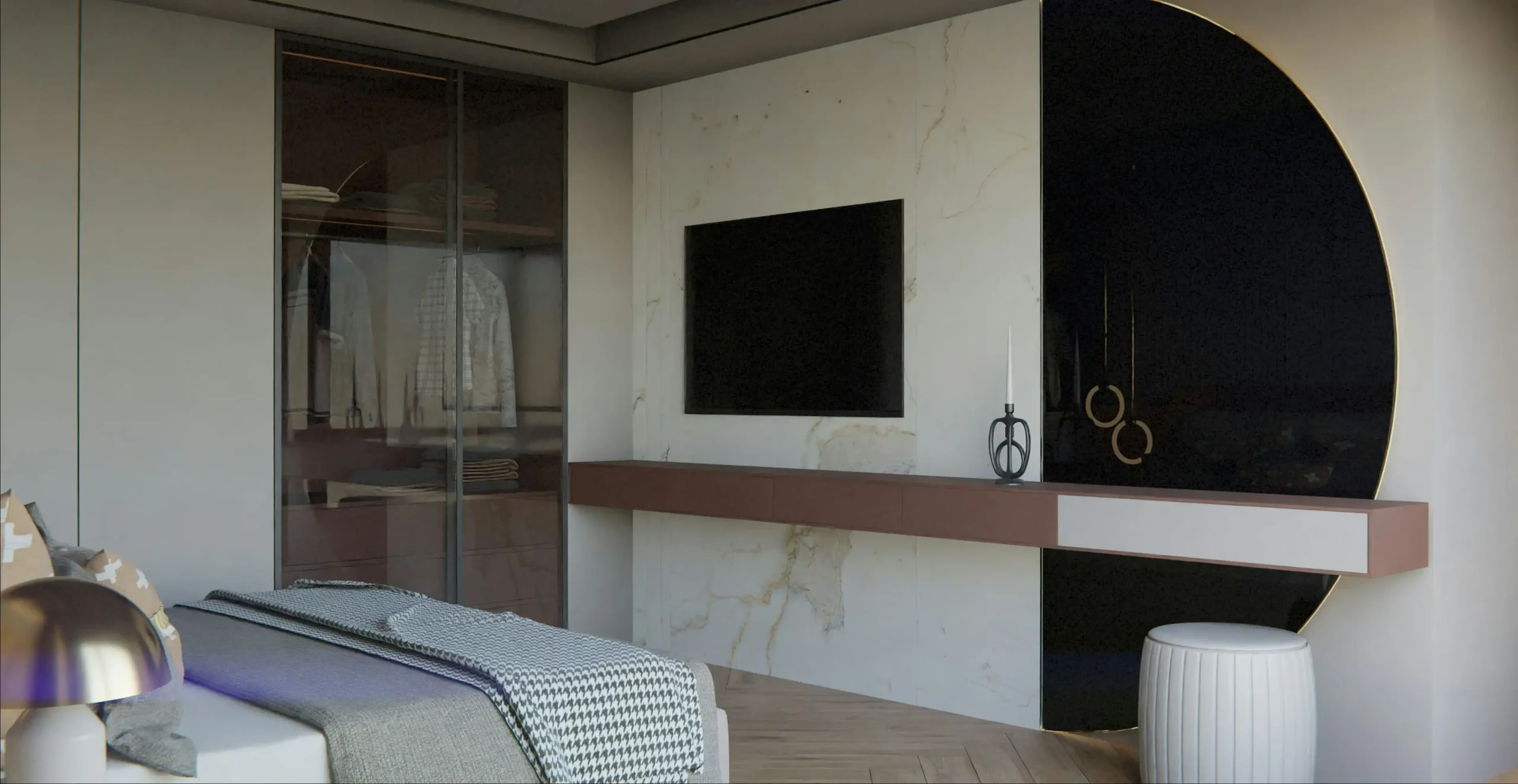
A television often becomes the main focus of a living room, but a screen on a plain wall can feel unfinished. A built-in TV unit solves this problem by combining the television, storage, lighting, and décor within one planned feature.
The best modern built-in TV wall unit designs do more than hold a screen. They hide wires, reduce clutter, provide useful storage, and help the TV feel like part of the room. Current TV wall trends often combine cabinetry with wood panels, stone finishes, floating consoles, open shelves, and soft lighting.
Below are 10 practical designs for large rooms, compact spaces, family homes, and modern interiors.
1. Floating TV Unit with Hidden Storage
A floating TV unit gives a living room a clean and modern look. The television is mounted on the wall, while a low cabinet is fixed above the floor. Because more floor remains visible, the room can feel larger. This makes it one of the best small living room TV wall ideas.
Handle-free drawers keep the design simple. They can store remote controls, game systems, cables, speakers, movies, and toys. Plan the wiring before mounting the TV. A hidden channel can keep power cords and HDMI cables out of sight.
Best for: Small rooms, apartments, and minimalist homes.
2. Floor-to-Ceiling Entertainment Center
A floor-to-ceiling entertainment center turns an empty wall into useful storage. The TV sits in the middle, surrounded by cabinets, drawers, and shelves.
It is one of the best built-in TV wall unit designs for families that need more storage. Closed cabinets hide clutter, while open shelves display books, plants, photos, and artwork.
Tall cabinets on both sides create a balanced look. An uneven layout can also work, with one tall cabinet on one side and floating shelves on the other. Light colors make a small room feel brighter, while dark finishes add drama to a larger space.
Leave enough space around the screen for airflow, repairs, and a larger TV in the future.
Best for: Family rooms, large living rooms, and storage-heavy homes.
3. TV Wall with Open Shelving and Base Cabinets
This design combines display shelves with hidden storage. Base cabinets sit below the TV, while open shelves frame the screen.
The shelves make the unit feel lighter than a full wall of closed cabinets. Use them for books, plants, artwork, and framed photos. Keep only a few items on each shelf to avoid a cluttered look.
Use the same shelf thickness throughout the design. You can match the shelves to the base cabinets or choose a contrasting material. Warm oak shelves, for example, can soften white or charcoal cabinetry. Store everyday clutter inside the lower cabinets.
Best for: Homeowners who want display space and hidden storage.
4. Built-In TV Cabinet with Doors
A cabinet with doors can hide the television when it is not being used. This helps a living room feel calmer and less focused on entertainment.
Door options include hinged, folding, sliding, and pocket doors. Pocket doors slide inside the cabinet, so they do not block the shelves. Sliding panels can hide the screen while revealing artwork or storage.
These built-in TV cabinet ideas are useful in formal living rooms, libraries, and rooms with more than one purpose. Make sure there is enough space for the doors to move. The cabinet also needs airflow to prevent electronic equipment from getting too hot.
Best for: Formal rooms and homeowners who want to conceal the TV.
5. Wood-Slat TV Feature Wall
Vertical wood slats add warmth and texture to a plain TV wall. They can cover the whole wall or only the space behind the screen.
Light oak creates a calm Scandinavian look. Walnut and dark wood add a richer and more dramatic feel. Wood slats work especially well with a simple floating cabinet.
The gaps may help conceal some cables, but proper cable channels and outlets are still needed. Avoid adding too many shelves or colors because they can compete with the wood pattern.
Warm LED lighting behind the TV panel or below the cabinet can create a soft glow in the evening.
Best for: Contemporary, Scandinavian, and warm minimalist interiors.
6. TV Wall with a Fireplace
Combining the TV and fireplace creates one clear focal point. This layout is useful when the room has only one suitable feature wall.
The TV can be mounted above or beside the fireplace. It can also sit over an offset firebox or between two storage cabinets.
An electric fireplace is often easier to add than a traditional model. However, the installer must follow all heat, airflow, and safety requirements. The screen should also remain at a comfortable viewing height. A TV mounted too high may cause neck strain.
Stone, tile, plaster, or wood panels can connect the two features and create one complete accent wall.
Best for: Cozy family rooms and living rooms with one main feature wall.
7. Stone or Marble-Effect TV Wall
Stone creates a bold and high-end background for a television. Options include marble, quartz, porcelain slabs, natural stone, and stone-look panels.
A large slab creates a smooth finish with fewer joints. Smaller tiles provide more texture but may make the wall look busy.
Balance the stone with warm wood cabinets or shelves. For example, a marble-effect panel can work well with walnut base cabinets. Current TV unit designs often mix stone, wood, and hidden lighting.
Confirm that the wall can support the weight of both the surface and television. Outlets, cable routes, and mounting points must be planned before the stone is installed.
Best for: Luxury interiors, large rooms, and dramatic feature walls.
8. Asymmetrical Built-In TV Wall
The television does not always need to sit in the center. An asymmetrical unit places the screen on one side and uses shelves, artwork, or a tall cabinet to balance the other.
This layout works well when the wall has a window, doorway, fireplace, or uneven space. For example, the TV and base cabinet may sit on the right, while a display cabinet fills the left side.
Repeat the same materials or colors across the unit to make both sides feel connected. Avoid using too many small shelves, as they can make the wall feel untidy.
Best for: Uneven walls, open-plan rooms, and less formal interiors.
9. Built-In Media Wall with a Desk or Bar
A TV wall can also include a small desk, bar, reading area, or display cabinet. This lets one wall serve several purposes.
A fold-out desk can be closed after work. A bar cabinet may include bottle storage, glass shelves, and lighting. These features make custom TV wall unit ideas useful in apartments and flexible living spaces.
Give each part of the unit its own storage. Keep work supplies separate from media equipment. A bar area should also have a surface that is easy to clean.
Plan enough outlets for the TV, internet equipment, chargers, lights, and small appliances.
Best for: Apartments, open-plan homes, and multi-use rooms.
10. Minimal TV Wall with Flush Cabinetry
A minimal TV wall uses flat doors, hidden handles, limited décor, and simple colors. The cabinetry appears to be part of the wall instead of a separate piece of furniture.
The TV may sit inside a shallow recess with flush cabinets around it. Dark doors can help a black screen blend into the unit when it is switched off.
Popular finishes include:
- Matte white
- Warm beige
- Soft gray
- Charcoal
- Natural oak
- Walnut
- Wood and painted finishes
Accurate measurements are important. Uneven gaps, exposed wires, and poorly aligned doors are easy to notice in a simple design.
These latest TV unit designs look clean and simple, but they need careful planning and skilled installation.
Best for: Modern homes and homeowners who prefer an uncluttered look.
How to Choose the Right TV Wall Unit Design
A beautiful idea may not work in every room. Before choosing between these built-in TV wall ideas, consider how the living room is used each day.
Measure the Complete Wall
Record the wall’s height and width. Also mark windows, doors, vents, outlets, switches, and baseboard heaters.
Do not measure only the television. The full design must fit around every fixed part of the room.
Choose the TV Size Early
Select the current screen size before the cabinetry is designed. If you may buy a larger television later, allow extra space around the opening.
The correct viewing distance depends on the screen, its resolution, and personal comfort. Test the position from the main seats before fixing the final height.
Decide What Needs to Be Stored
Make a list of everything the TV Wall must hold, including:
- Media players
- Routers
- Game systems
- Controllers
- Speakers
- Books
- Toys
- Board games
- Movies
- Charging devices
- Decorative objects
This list will help determine the right mix of drawers, shelves, and cabinets.
Plan Hidden Wiring and Ventilation
A good TV unit should hide wires without making them impossible to reach. Include access panels, cable channels, and suitable outlets.
Media equipment can produce heat. Closed cabinets may need vents or openings that allow air to circulate.
Do not place routers or remote-controlled equipment behind materials that may block their signals unless a suitable control system is planned.
Match the Room’s Style
The TV cabinet should connect with the home décor instead of looking like a separate object.
Use colors and materials found elsewhere in the room. Cabinetry might match the wall color for a quiet look or contrast with it to create a bold focal point.
Plan the Lighting
LED strips, shelf lights, and small spotlights can make the unit more inviting. Use warm, soft light for display shelves and dimmable lighting for evening viewing.
Avoid strong lights that reflect directly on the screen or shine into the viewer’s eyes.
Built-In TV Wall Ideas for a Small Living Room
In a small room, a deep or dark entertainment center may feel too heavy. Use a simpler layout that adds storage without taking over the wall.
Helpful choices include:
- A shallow floating cabinet
- Wall-mounted shelves
- Light-colored finishes
- Handle-free doors
- One tall storage cabinet instead of two
- Closed storage below the screen
- Vertical lines that make the ceiling feel higher
- A design that matches the wall color
Avoid filling every open space. Some blank wall area around the screen will help the room feel larger.
For more control over depth and storage, built-in furniture can be fitted to the room instead of relying on a ready-made unit with fixed measurements.
Built-In TV Unit Materials and Finishes
The finish affects the appearance, price, care needs, and life of the unit.
| Material or finish | Main benefit | Point to consider |
| Painted MDF | Smooth finish and many color options | Edges need protection from moisture |
| Plywood | Strong construction and good screw holding | Usually costs more than particleboard |
| Solid wood | Natural character and long life | Can expand or contract with humidity |
| Wood veneer | Real wood appearance with consistent panels | Damaged veneer can be hard to repair |
| Laminate | Durable and easy to clean | Low-quality products may look less natural |
| Stone or porcelain | Strong visual impact | Weight and installation need planning |
| Glass | Keeps displays visible and reduces dust | Shows fingerprints and reflections |
A unit may use more than one material. For example, plywood cabinet boxes can be combined with painted doors, wood-veneer shelves, and a porcelain TV panel.
Custom Built-In Unit vs Ready-Made TV Stand
A ready-made TV stand usually costs less and can be moved. However, it may leave gaps, expose wires, and provide limited storage.
A custom built-in unit is made for the exact wall. It can work around unusual corners, sloped ceilings, windows, fireplaces, and electrical points. It also allows the homeowner to choose the cabinet layout, color, material, lighting, and hardware.
Working with professional custom cabinetry contractors can be helpful when the design includes floor-to-ceiling storage, unusual wall conditions, hidden wiring, or several fitted materials.
Final Thoughts
The best Built-In TV Wall Unit Designs combine style with daily function. A floating console can make a small living room feel open. Floor-to-ceiling cabinetry can provide major storage. Wood slats, stone panels, fireplaces, and lighting can turn the television into a planned part of the interior design.
Frequently Asked Questions
Are built-in TV wall units still popular?
Yes. Modern units use clean lines, floating cabinets, concealed storage, natural wood, textured panels, and integrated lighting. These features give them a more current appearance than older, bulky entertainment centers.
What is the best design for a small living room?
A floating base cabinet with a wall-mounted television is often a good choice. It provides storage while keeping more of the wall and floor visible.
Should a built-in TV unit reach the ceiling?
It can, but it does not have to. Floor-to-ceiling cabinetry provides more storage and creates a strong architectural feature. A lower unit may make a compact room feel more open.
How do you hide wires in a built-in TV unit?
Wires can pass through an approved in-wall cable system, conduit, access channel, or space behind a removable panel. Outlets and cable access should be planned before installation.
Can a fireplace be included in a TV wall?
Yes, but the fireplace manufacturer’s clearance, heat, and ventilation instructions must be followed. The screen should also remain at a comfortable viewing height.
What can you display on built-in TV shelves?
Books, plants, framed photos, small sculptures, and decorative boxes work well. Leave open space around the objects so the shelves do not compete with the screen.
How deep should a built-in TV cabinet be?
The correct depth depends on the equipment and storage needs. A shallow floating console may be enough for small devices, while audio equipment, game systems, and deep drawers may require more space.
Is a custom TV wall unit worth it?
It may be worth it when you need fitted storage, hidden wiring, a precise wall-to-wall finish, or a solution for an unusual room. A ready-made stand may be enough when budget and flexibility are more important.