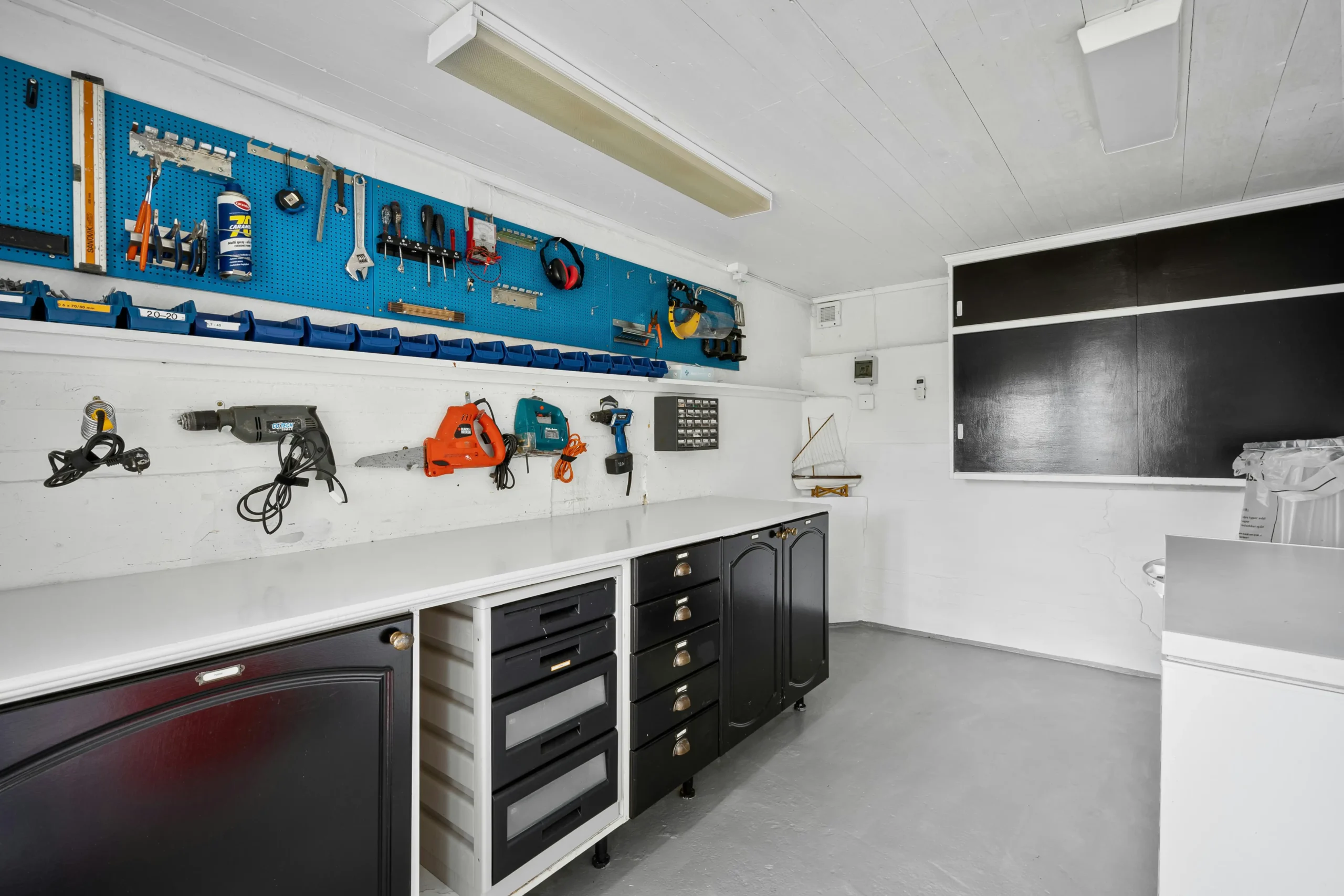
A garage can become cluttered in a surprisingly predictable way.
One corner collects sports gear. Another becomes home to half-used paint cans. Tools disappear into mystery boxes, while holiday decorations occupy shelves you cannot reach without moving the car.
The problem is not always a lack of space. More often, the garage has never been designed around how the household actually uses it.
The best garage storage design ideas do more than add cabinets. They give every activity its own zone. They also make frequently used belongings easy to grab and less-used items easy to store.
Ready to reclaim your garage? These ten ideas go beyond basic cupboards and create storage that works in real life.
1. Create a “Ten-Minute Return” Cabinet
Here is a fresh rule for garage organization: anything you regularly take out of the house should be easy to return in ten seconds or less.
Think about reusable shopping bags, dog leashes, helmets, flashlights, and children’s sports gear. If putting an item away requires opening three boxes, nobody will do it. It will land on the floor instead.
Create a cabinet near the door into your home for these everyday items. Include:
- Low cubbies for shoes
- Hooks for bags and helmets
- A ventilated section for damp gear
- A shallow drawer organizer for keys and small accessories
- An open shelf for items leaving with you tomorrow
This “launch-and-land” zone keeps daily clutter from spreading across the garage. It also prevents the familiar morning search for a missing glove or soccer ball.
Among all the ideas for garage cabinets, this may make the biggest difference because the whole family can use it without changing their routine.
2. Divide the Garage Into Clean and Dirty Zones
Most homeowners organize by item type: tools here, sports equipment there. Try organizing by cleanliness instead.
Create a dirty zone near the garage door for muddy boots, garden tools, snow equipment, and wet outdoor gear. Use easy-clean cabinets, hooks, and open space that allows damp items to dry.
Reserve a clean zone closer to the house for pantry overflow, paper products, household supplies, and stored clothing.
This simple division stops garden soil from appearing beside bulk groceries. It also makes material selection easier. A powder-coated steel cabinet or moisture-resistant surface may suit the dirty zone, while laminate cabinetry can create a warmer look near the home entrance.
It is a smarter storage solution because it considers how mess travels, not only where an object fits.
3. Add a Vertical Pull-Out for Long Tools
Rakes, shovels, brooms, and trimmers are awkward. Store them horizontally, and they consume an entire wall. Lean them in a corner, and one always falls when you pull out another.
A narrow vertical pull-out solves the problem.
Picture a tall cabinet section that slides forward like an oversized kitchen pantry. Inside, dividers keep long-handled tools upright and separated. You can see every tool at once without digging through a tangled pile.
This is one of the most space-efficient small garage cabinet ideas because it uses a narrow gap that might otherwise be wasted.
If a pull-out is not practical, a full-height storage cabinet with internal hooks can achieve a similar result. Add a raised base or removable tray to catch dirt and make cleaning easier.
4. Build a Workbench That Can Disappear
A permanent work surface sounds useful, until it becomes a parking place for unopened packages, paint cans, and tools you meant to put away last month.
For a garage that must accommodate vehicles and projects, consider a fold-down workbench built into the cabinet wall. When closed, it keeps the floor clear. When opened, it provides a stable surface for repairs, crafts, or home projects.
Surround it with task-focused storage:
- Shallow drawers for hand tools
- Deep drawers for power tools
- Vertical slots for tool cases
- Charging space for batteries
- A tool panel behind the folding surface
- Task lighting under the upper cabinets
These garage workshop cabinet ideas prevent the work area from swallowing the rest of the garage.
A built-in charging drawer is especially useful. It keeps batteries and cords together instead of allowing chargers to occupy every available outlet. The drawer must be designed with appropriate electrical and ventilation considerations by qualified professionals.
5. Use “Parking Geometry” Before Designing Cabinets
Many attractive garage cabinet ideas fail for one simple reason: nobody checks how car doors open.
Before selecting cabinet depth, park every vehicle inside. Open the driver, passenger, and rear doors. Roll out the garbage bins. Move bicycles through their normal route. Then mark the areas that must remain clear.
Cabinets can then be made shallower beside car doors and deeper near the back wall. Upper units may provide extra storage capacity without reducing walking space. Wall-mounted lower cabinets can also leave more visible floor, helping tight garages feel less crowded.
Good garage cabinet layout ideas start with movement, not cabinetry. If you cannot comfortably exit the car after installation, the design has failed no matter how beautiful it looks.
6. Design a Seasonal “Now and Later” Wall
Seasonal storage usually ends up in one of two places: scattered around the garage or buried so deeply that finding it takes an afternoon.
Instead, divide one cabinet wall into “now” and “later” zones.
Place current-season gear at chest or eye level. Store off-season items higher up. When the weather changes, switch the contents rather than reorganizing the entire garage.
For example:
- Winter: skis, boots, snow tools, and cold-weather gear stay accessible.
- Summer: camping supplies, sports equipment, and gardening items move forward.
- Year-round: emergency equipment and household tools remain in a fixed location.
Combine enclosed cabinets with adjustable shelving so the system can accommodate changing items. Clearly labeled upper cabinets can hold lightweight decorations and seasonal supplies.
This is custom storage that changes with the calendar rather than expecting one static layout to work all year.
7. Turn an Awkward Corner Into a Gear Locker
Garage corners often become dead zones. Standard cabinets may not fit, and loose belongings quickly fill the gap.
A corner gear locker can turn that awkward space into useful storage for skis, fishing rods, golf clubs, folding chairs, or sports equipment.
Unlike a regular cabinet filled with shelves, the interior can remain mostly open. Add vertical dividers, hooks, and a high shelf for smaller accessories. Ventilated doors can help damp equipment dry instead of trapping odor inside.
For families, divide the locker into individual sections. Give each person a hook, shelf, and basket. The system becomes a miniature equipment room instead of one large cabinet where everything gets mixed together.
This is one of the most practical garage storage cabinet ideas for active households because it organizes equipment by owner and activity.
8. Add an Inventory Door
Have you ever purchased another box of screws, only to find three unopened boxes later?
Turn the inside of a cabinet door into a simple inventory station. Add a dry-erase panel, clipboard, or replaceable list showing what is stored inside and what needs replacing.
The idea works well for:
- Hardware and fasteners
- Car-care supplies
- Gardening products
- Cleaning supplies
- Paint and repair materials
- Household backstock
You can also add a QR code linked to a private household inventory or paint-color record. Scan it to check the paint brand, finish, room, and purchase date without opening several cans.
This small addition makes the storage system more intelligent. The cabinet does not merely hold items; it helps you remember what you already own.
9. Choose Materials by Zone, Not by Trend
One material does not have to cover the entire garage.
Steel and powder-coated steel can work well in demanding tool zones. Their finish should be selected for suitable corrosion and scratch resistance. Stainless steel offers a sleek industrial appearance, although it can increase the budget.
Aluminum is lightweight and naturally corrosion-resistant, making it useful in some damp environments. Its construction and load rating still matter, especially for heavy equipment.
Wood-based materials create a warmer, more residential look:
- Plywood offers dependable structural performance when properly constructed and finished.
- MDF provides a smooth surface for painted doors but needs protection from prolonged moisture.
- Hardwood can give a premium, furniture-like appearance.
- Laminate offers an easy-clean surface in a wide selection of colors and textures.
The best garage cabinet design may combine materials. Durable utility finishes can serve the work zone, while refined cabinetry makes the entrance from the house feel more welcoming.
Always consider moisture, temperature changes, intended loads, hardware, and maintenance, not just color.
10. Create a Cabinet With an Empty Shelf
This may sound strange, but leave part of your new cabinet intentionally empty.
Garages change. Children pick up new sports. Tools accumulate. Bulk purchases arrive. Without a little spare room, even a beautifully organized garage can begin overflowing within months.
Reserve approximately one adjustable shelf or drawer as “flex space.” It can temporarily hold a new appliance, an upcoming project, donation items, or equipment that has not yet earned a permanent home.
This is one of the most overlooked modern garage cabinet ideas because most designs try to fill every inch immediately. But maximizing space does not mean packing it to capacity. A little breathing room makes the entire system easier to maintain.
The most useful durable cabinets are prepared for what you own today and what may arrive tomorrow.
What Are the Best Garage Cabinet Ideas?
So, what are the best garage cabinet ideas? The answer depends on the problems happening in your garage right now.
If equipment lands by the door, build a family drop zone. If long tools keep falling, add vertical storage. If your workbench attracts clutter, make it fold away. If the car barely fits, design around its movement before choosing cabinet depth.
A successful plan usually includes a mix of:
- Tall cabinets for bulky equipment
- Drawers for small tools and hardware
- Upper cabinets for less-used supplies
- Open shelves for frequently used containers
- Lockable storage where appropriate
- A work surface for hobbies and repairs
- Flexible space for future needs
The best design is not the one with the most cabinets. It is the one that removes the small frustrations you experience every day.
Are Garage Cabinets Worth It?
Are garage cabinets worth it? They can be, when they protect belongings, clear the floor, reduce visual clutter, and make the garage easier to use.
However, cabinets are only worthwhile when their dimensions and interiors match what you plan to store. A wall of shallow cabinets will not help if you own bulky power tools. Rows of tiny drawers will not solve a sports-equipment problem.
Before purchasing cabinets, group everything into categories. Measure large items and check the weight of tools or equipment. Decide which belongings should be visible, concealed, secured, or quickly accessible.
This inventory prevents you from paying for attractive cabinets that do not provide useful storage.
Bring Better Garage Cabinet Ideas to Life
Online inspiration can help you discover possibilities. The final design still needs to fit your walls, vehicles, belongings, and daily routine.
Knudson Cabinetry designs and installs custom garage cabinets with options such as personalized workbenches, adjustable shelving, drawers, lockable compartments, wall-mounted units, and integrated storage for tools and seasonal gear.
Working with an experienced custom cabinet maker also allows awkward corners, changing cabinet depths, unusual equipment, and preferred finishes to become part of the plan. Rather than forcing standard boxes into the room, each section can have a clear purpose.
The goal is not simply to make the garage look tidy on installation day. It is to create a space that still works on a wet Monday morning, during a weekend repair, and when the holiday decorations come back down.