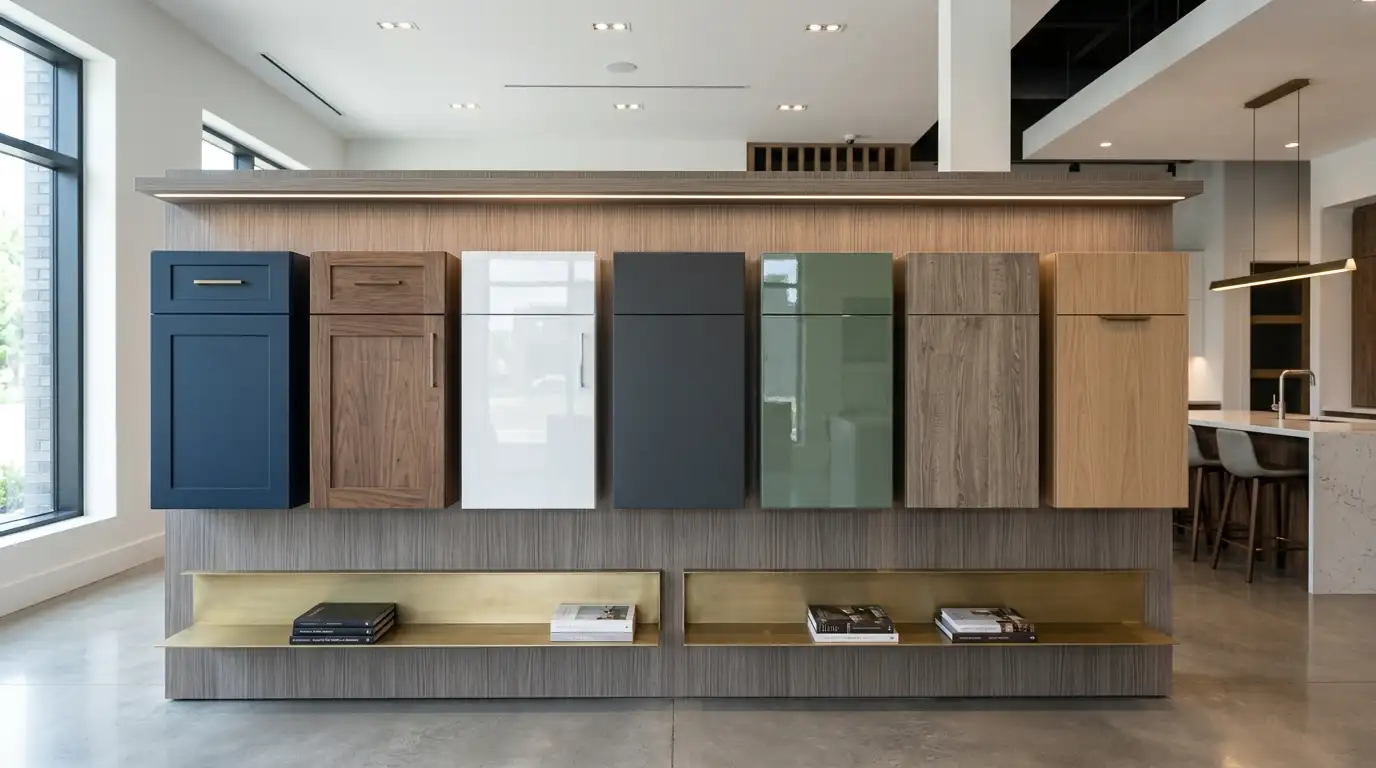
Quick Answer: The main types of cabinet finishes are paint, stain, lacquer, laminate, glaze, acrylic, and wood veneer. The best one depends on your room, your budget, and how much daily use your cabinets handle. Most kitchens do best with satin paint or lacquer. Budget builds lean on laminate.
Your cabinet finish changes how every room feels and decides how long your cabinets hold up under daily cooking, cleaning, and humidity. Pick the wrong one, and you are dealing with chipped doors or swollen edges within a few years. Homeowners searching for the right kitchen cabinet finishes often get overwhelmed by options, so this guide breaks it all down simply.
Types of Cabinet Finishes: Which Cabinet Finish Is Best for Your Home?
Choosing the right cabinet finish affects your kitchen’s appearance, durability, maintenance requirements, and long-term value. While dozens of cabinet finishing options exist, seven cabinet finishes consistently dominate modern U.S. kitchen and bathroom designs. Understanding the advantages, disadvantages, costs, and maintenance needs of each finish can help you make the best choice for your home.
1. Painted Cabinet Finish
A painted finish remains the most popular cabinet finish for kitchens in the United States. Homeowners love painted cabinets because they offer unlimited color options, affordable touch-ups, and compatibility with both traditional and modern cabinet styles.
Among painted finishes, satin cabinet finish is the most commonly used, accounting for a significant percentage of newly painted kitchens. Satin provides an ideal balance between durability and appearance, hiding minor scratches while remaining easy to clean.
- Matte finish: Creates a soft, contemporary look but can show fingerprints, grease, and smudges more easily.
- Glossy finish: Reflects light, making small kitchens appear larger and brighter, although it requires more frequent cleaning.
- Average cost: $1,500–$4,500 for professional kitchen cabinet painting.
2. Stained Wood Cabinet Finish
A stain finish penetrates the wood instead of covering it, allowing the natural grain pattern to remain visible. This makes stained cabinets one of the most popular wood cabinet finish options for homeowners who want a natural and timeless appearance.
Different wood species create different results:
- Oak: Bold, visible grain patterns.
- Maple: Smooth and consistent appearance.
- Cherry: Deepens in color and character over time.
Professional staining typically costs between $800 and $4,000, with resealing recommended every three to five years in high-traffic kitchens.
3. Lacquer Cabinet Finish
Lacquer is a premium cabinet finish known for its exceptionally smooth appearance and durable protective coating. Applied through a spray process, lacquer creates a hard, furniture-quality surface.
Catalyzed lacquer contains additional hardeners that improve resistance to moisture, household chemicals, and daily wear, making it one of the most durable cabinet finishes available.
- Highly resistant to moisture and stains.
- Smooth, professional-grade appearance.
- Ideal for modern and luxury kitchens.
- Average cost: $3,000–$8,000.
Cabinets near sinks and cooking areas should be inspected regularly for early signs of wear.
4. Laminate Cabinet Finish
Laminate cabinets feature a synthetic decorative layer bonded to a wood-based core under high pressure. This finish is valued for affordability, durability, and low maintenance.
High-pressure laminate (HPL) offers excellent resistance to:
- Scratches
- Moisture
- Heat
- Everyday spills
As one of the most budget-friendly cabinet finish options, laminate typically costs between $800 and $3,000. The primary drawback is potential edge chipping after years of use.
5. Acrylic Cabinet Finish
An acrylic cabinet finish uses a high-gloss acrylic sheet bonded to MDF or engineered wood. The result is an ultra-smooth, reflective surface that is highly popular in contemporary and minimalist kitchen designs.
Benefits include:
- Mirror-like appearance
- UV resistance and color stability
- Excellent moisture resistance
- Modern, luxury aesthetic
Professional installation generally costs $3,500–$7,000. While acrylic provides superior visual appeal, it can scratch more easily than laminate.
6. Wood Veneer Cabinet Finish
Wood veneer consists of a thin layer of real wood, typically between 0.5mm and 2mm thick, bonded to MDF or plywood. Because the surface is genuine wood, veneer cabinets deliver the appearance of solid wood at a lower cost.
Wood veneer is commonly used for:
- Custom built-ins
- Home offices
- Libraries
- High-end cabinetry projects
To maximize longevity, exposed edges should be properly sealed to prevent moisture penetration and swelling.
7. Glazed Cabinet Finish
Unlike other cabinet finishes, glazing is applied over an existing painted or stained surface. The glaze is brushed on and partially removed by hand, leaving color concentrated in corners, grooves, and decorative details.
This finishing technique creates:
- Added depth and dimension
- Antique or distressed appearance
- Enhanced decorative detailing
- Greater visual character
Because glazing is labor-intensive and requires specialized craftsmanship, it typically adds $2,000–$10,000 to a cabinetry project.
Quick Comparison of Cabinet Finishes
| Cabinet Finish | Durability | Maintenance | Cost Range |
|---|---|---|---|
| Paint | Moderate | Low to Moderate | $1,500–$4,500 |
| Stain | High | Moderate | $800–$4,000 |
| Lacquer | Very High | Moderate | $3,000–$8,000 |
| Laminate | High | Low | $800–$3,000 |
| Acrylic | High | Moderate | $3,500–$7,000 |
| Wood Veneer | Moderate to High | Moderate | Varies |
| Glaze | Depends on Base Finish | Moderate | +$2,000–$10,000 |
The best cabinet finish depends on your budget, design style, maintenance preferences, and durability requirements. For most homeowners, satin-painted cabinets offer the best balance of appearance, durability, and ease of maintenance, while lacquer and acrylic finishes remain top choices for modern luxury kitchens.
Which Cabinet Finish Is Best For Kitchens?
Most popular cabinet finishes for kitchen design right now break down simply: satin paint for everyday family kitchens, high-pressure laminate for budget or wet-heavy spaces, and lacquer for anyone prioritizing longevity. What is the most popular finish for cabinets across the US market? Satin-painted cabinets in white or warm neutrals that has held true for years.
Picking a high-maintenance finish for a busy space is one of the most practical mistakes to avoid when remodeling a kitchen. Matte next to a gas burner means wiping after every single meal. High-gloss with young kids means fingerprints on every surface by morning.
Matte vs. Glossy Cabinet Finish: The Real Difference
When comparing matte vs. glossy cabinet finishes, the best choice depends on your style preferences and maintenance needs. Matte finishes absorb light, creating a soft, sophisticated appearance, but they can make grease, fingerprints, and smudges more noticeable. Glossy finishes reflect light, helping kitchens feel brighter and more spacious, while also making surfaces easier to wipe clean. If you’re wondering which cabinet finish looks the most modern, many U.S. kitchen designers favor high-gloss and acrylic finishes for their sleek, contemporary appeal. However, satin finishes remain the most popular option because they offer a balanced combination of elegance, durability, and easy maintenance.
Best Cabinet Finishes by Room
Best cabinet finishes for modern homes shift depending on what each room demands:
- Kitchens: A paint finish for cabinets in satin or lacquer works on boxes. Acrylic or laminate for door fronts near water. Keep matte away from stoves and sinks. For tighter budgets, the cheapest cabinet finishes for kitchen cabinets are high-pressure laminate and repainted existing boxes.
- Bathrooms: Bathroom cabinet finishes need sustained moisture resistance. Laminate, acrylic, and lacquer all handle bathroom humidity. Painted MDF vanities need every edge fully sealed or the bottoms quietly swell over months.
- Closets: Dry bedroom closets work fine with painted MDF in satin or matte. The real gap between custom closets vs ready-made closets shows up in finish quality ,factory-sprayed coatings versus field-applied brush work are genuinely different products.
- Garages: Idaho garage temperatures swing hard between seasons. High-pressure laminate and catalyzed lacquer handle it. Garage cabinetry solutions using standard painted finishes peel or bubble within a couple of years in those conditions.
What Most Finish Guides Skip
Three gaps show up across competitor content on types of cabinet finishes, and all three change real outcomes.
Factory versus field finishing is not the same product. A factory finish cures under UV or heat in a controlled environment. A field finish brushed on after installation picks up dust, shows lap marks, and cures unevenly. For any custom build, factory finishing is worth asking about specifically.
Material and finish have to match. MDF takes paint well but cannot be stained. Solid wood stains beautifully but moves with humidity. Laminate cannot be repainted cleanly. Wrong pairing means peeling within two to three years regardless of finish quality.
Cleaning products destroy finishes faster than daily wear does. Bleach, ammonia sprays, and scrubbing pads break down lacquer, strip glaze from recessed areas, and dull matte surfaces in months. A damp microfiber cloth with mild dish soap is the safe choice for every finish type. According to The Spruce’s kitchen cabinet cleaning guide, wrong cleaning products are the top reason cabinet finishes fail ahead of schedule.
A cabinet finishes cost comparison works out better when material, finish, and application method get planned together. That is exactly the approach custom cabinetry solutions in Idaho Falls takes ,every finish decision matched to the room, the material, and how the space actually gets used daily.
Frequently Asked Questions:
What is the most durable finish for kitchen cabinets?
Catalyzed lacquer, no contest. It sets hard and shrugs off grease, steam, and whatever cleaning spray you throw at it for 15 to 20 years. Tight on budget? High-pressure laminate is your next best bet.
Does cabinet finish actually affect resale value?
More than you’d think. Buyers spot tired, peeling surfaces within seconds of walking in. A solid satin or lacquer finish makes the whole kitchen read newer and cleaner, and that shows up in offers.
How long before painted cabinets need a full repaint?
Seven to ten years if the job was done right with good primer and a proper topcoat. Satin holds up longer than matte day to day since grease wipes off instead of soaking in. Regular spot touch-ups buy you even more time.
Can you redo the finish without pulling out the cabinets?
Usually yes. A pro can sand, prime, and repaint or relacquer a full kitchen for $1,500 to $4,500. The two exceptions are laminate, which does not take new paint cleanly, and stain over existing paint, which just does not work.
Why do cabinet finishes start peeling or bubbling?
Nine times out of ten it comes down to moisture sneaking in through unsealed MDF edges. Dishwasher steam and slow drips under the sink do the rest of the damage. Seal the edges properly upfront and skip the bleach sprays and most of that never happens.
Which finish hides everyday scratches best?
Satin paint and stained wood are the most forgiving by far. The texture and grain break up light so small marks just blend in. Gloss does the opposite and basically puts a spotlight on every single scuff.
Final Thoughts on Cabinet Finishes
Paint, stain, lacquer, laminate, acrylic, veneer, glaze ,the types of cabinet finishes available today cover every style, budget, and room condition a US homeowner runs into. Match the finish to the room and how your household actually uses it every single day.
Want those decisions made right from the start? The team at Knudson Cabinetry builds custom cabinets where finish, material, and construction all work together from day one.