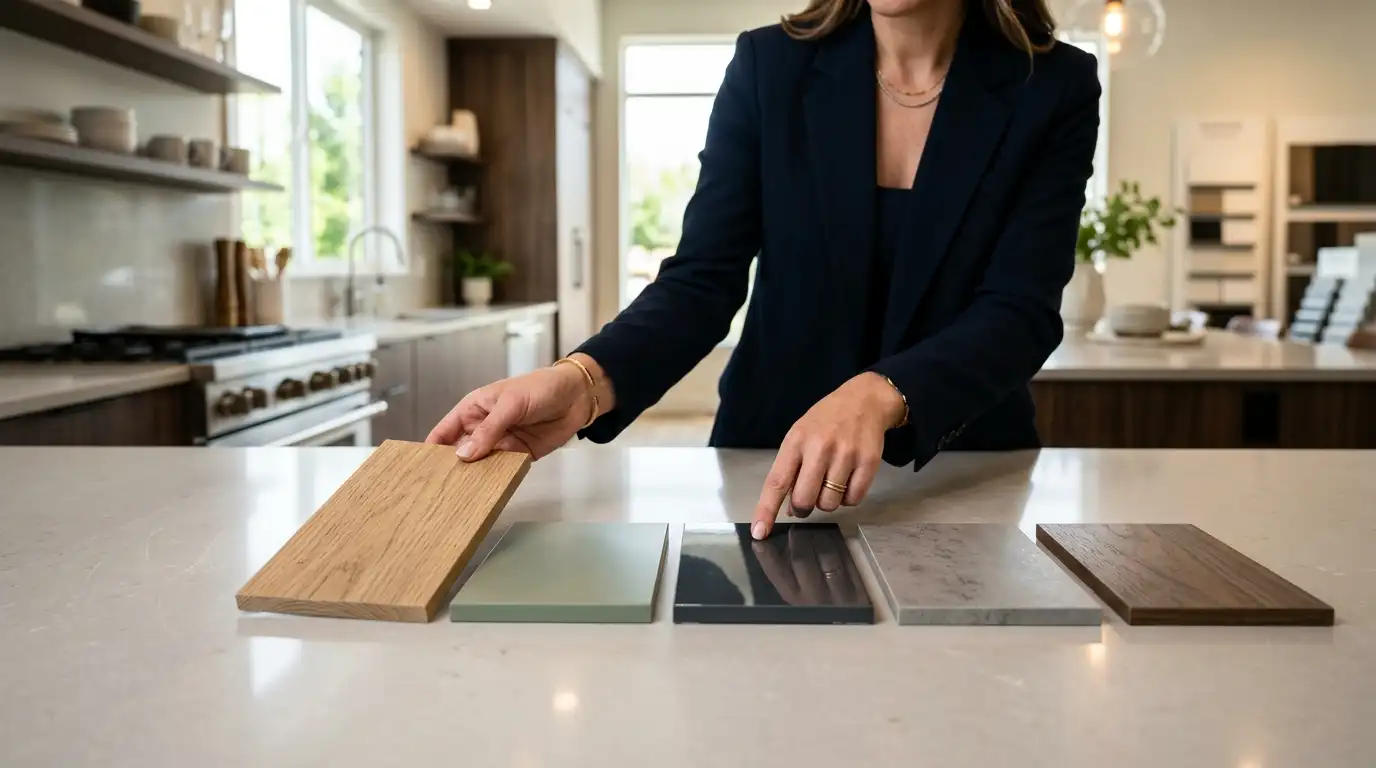
Quick Answer: The main types of cabinet material are solid wood, plywood, MDF, and composite wood. Solid wood lasts the longest but costs the most. Plywood is the strongest all-around kitchen pick. MDF is best for painted dry spaces. Your room, budget, and daily use should drive the final decision.
Among all the types of cabinets material available today, the material you choose affects everything else. How the cabinets look, how long they hold up, what they cost to repair, and what a buyer thinks when they walk through your home ten years from now. Worth spending ten minutes on before anything else. With so many types of cabinet materials on the market, it helps to understand where each option performs best before making a final decision.
Types of Cabinet Material and What Sets Each One Apart
- Solid wood gets cut directly from logs. No glue, no compression, no processing beyond milling and drying. That is why it looks and feels different from everything else. Run your hand across a solid cherry door, and you feel real grain, real texture, real wood character. Oak, maple, cherry, and hickory are the four species that US cabinet shops work with most. Solid wood runs $500 to $1,200 per linear foot, and it is the only material on this list that you can sand down and refinish when it starts looking tired.
- Plywood gets built from thin wood veneers layered in alternating directions and pressed together. That cross-grain structure is what makes it so stable. Cabinet-grade Baltic birch is the version worth asking for by name. It has more plies than standard construction plywood and a tighter core with no voids. Cost runs $60 to $225 per linear foot. Most serious cabinet shops use plywood for boxes because it holds screws firmly and handles daily kitchen conditions reliably for over 20 to 30 years.
- MDF gets made from fine wood fiber compressed with resin under high heat into flat, perfectly uniform panels. Zero grain, zero knots, zero variation. It costs $40 to $150 per linear foot and machines cleanly for routed profiles and flat panel doors. The trade-off is that it does not grip screws well near edges and swells permanently when water gets in.
- Composite wood, mainly particleboard, is what most stock and RTA cabinets use to hit low price points. It costs $20 to $80 per linear foot. Fine for a dry spare room. Not built for a working kitchen. Many homeowners ask, “Is composite wood a good material for cabinets?” The answer depends on the space. It can work in low-use, dry areas, but it is rarely the best choice for a busy kitchen.
Cabinet Materials Comparison
When comparing the most common types of cabinet materials, cost is only one part of the equation.
| Material | Cost Per Linear Foot | Screw Holding | Lifespan | Refinishable |
|---|---|---|---|---|
| Solid Wood | $500 to $1,200 | Excellent | 50 plus years | Yes, multiple times |
| Plywood | $60 to $225 | Strong | 20 to 30 years | Yes with prep |
| MDF | $40 to $150 | Moderate | 7 to 15 years dry | No |
| Composite | $20 to $80 | Weak | 5 to 10 years | No |
Which Material Goes Where in a Cabinet
This is the part most homeowners never hear before they make a decision, and it genuinely changes outcomes. The best cabinet material for kitchen builds is rarely one single product used everywhere. Different parts of the cabinet do different jobs.
The box, meaning the carcass, sides, top, bottom, and shelves, takes the most structural load. Plywood is the right call here almost every time. It holds hinges and drawer slides securely for years without loosening.
The door face is what you actually see. This is where solid wood earns its price for stained finishes and where MDF earns its place for painted finishes. Plywood vs MDF vs solid wood cabinets is really a question of what finish you want and how much you want to spend on the visible surface.
Face frames are almost always solid wood because they get touched, bumped, and occasionally nicked. Solid wood handles minor damage better than MDF and can be touched up cleanly.
Picking the Right Wood Species
Natural wood materials behave differently depending on species. Different types of wood materials each bring something specific to a cabinet build. Oak and maple, for example, are noticeably harder than alder, which is one reason they are often chosen for busy kitchens and high-traffic areas where cabinets take more daily wear and tear. If you’re comparing wood species, understanding how each one looks, ages, and performs can make the decision much easier.
Here is how the most popular options break down:
- Oak: Very hard, open grain, takes stain evenly. The most widely used cabinet wood in US homes for the past 30 years.
- Maple: Hard and fine-grained, popular for both painted and stained contemporary kitchens.
- Cherry: Starts lighter and deepens into a rich, warm color over years of light exposure. Difficult to match on repairs.
- Hickory: Hardest domestic option. Bold, dramatic grain variation. Best match for rustic and farmhouse styles.
- Alder: Softer and lower cost. Good choice for painted cabinet projects where budget matters.
Most popular cabinet materials in US custom builds right now are maple and oak for stained finishes and maple or alder for painted finishes.
How to Read Cabinet Quality Before You Buy
Most people judge cabinets by the door finish and miss what is actually inside. Pull a drawer out completely and look at the box construction, regardless of the types of cabinets material being used. Dovetail joinery on solid wood drawer boxes is the sign of serious quality. Check the drawer slides next. Undermount soft-close slides from brands like Blum or Grass hold up for 50,000 open-close cycles.
Open a door and look at the hinge. Six-way adjustable hinges mean a cabinet shop that planned for real-world use. Pull on a shelf. MDF shelves on wide spans sag under dishware weight. Plywood shelves on the same span hold firm.
This is the kind of cabinet materials comparison that actually matters, not just the finish you see from across the room. A custom cabinetry contractor who builds with quality joinery and plywood boxes is a fundamentally different product from a stock cabinet line, even when they look similar in photos.
What a Full Kitchen Costs by Material
The cost difference between various types of cabinets material can be significant, which is why it helps to compare long-term value instead of focusing only on the initial price. Here is an honest breakdown for a typical 20-linear-foot US kitchen. Think of this as your kitchen cabinet material guide for budgeting before you talk to anyone.
- Solid wood throughout runs $10,000 to $24,000 in material costs before finish, hardware, and installation.
- Plywood boxes with solid wood door fronts run $6,000 to $14,000. This is where most serious custom kitchen builds land.
- Plywood boxes with MDF painted doors run $4,000 to $9,000. The most popular configuration for modern painted kitchens.
- All-MDF construction runs $2,500 to $6,000. Fine for a dry, low-traffic space. Risky in a kitchen with daily moisture exposure.
- Stock composite cabinets run $800 to $3,000 for the same run. The price is real, but so is the 5 to 10 year lifespan.
Knowing what is the best material for cabinets for your budget only gets answered when you factor in both upfront cost and long-term replacement cost. Choosing durable cabinet materials for homes up front is almost always the better financial decision.
Frequently Asked Questions
What is the best material for cabinets in a kitchen?
Plywood boxes with solid wood or MDF door fronts. You get structural strength where it counts and the right finish surface where it shows.
Is composite wood a good material for cabinets?
Not for kitchens. Screws strip fast, the material swells easily, and lifespan under real daily use rarely clears ten years.
Plywood vs MDF vs solid wood cabinets, which gives the best value?
Plywood boxes with MDF painted doors. You get reliable structure at a fraction of solid wood cost and a painted surface that looks just as clean.
How do I know if a cabinet is actually built well?
Pull a drawer out and check the box joinery. Look at the hinge quality and whether it is adjustable. Good cabinets use dovetail drawer boxes, soft-close undermount slides, and plywood shelving that does not flex.
Do different wood species affect cabinet durability?
Yes. Hickory and hard maple are significantly denser than alder or cherry. For high-traffic kitchens, oak or maple holds up better long term.
Does cabinet material affect what finishes you can use?
Completely. MDF cannot be stained. Solid wood and plywood take stains well. MDF takes paint better than any other material. Composite surfaces are hard to paint cleanly and do not hold a finish long term.
Wrapping It Up
Solid wood, plywood, MDF, composite. The types of cabinet materials available cover every budget and every kitchen condition a US homeowner runs into. Solid wood for cabinets that age beautifully. Plywood for structural reliability. MDF for clean painted finishes in dry spaces. Composite only when nothing else fits the budget.
Match the material to the part of the cabinet it is going into, and you will not make a decision you regret. Talk to a custom cabinetry contractor who builds that way from day one.