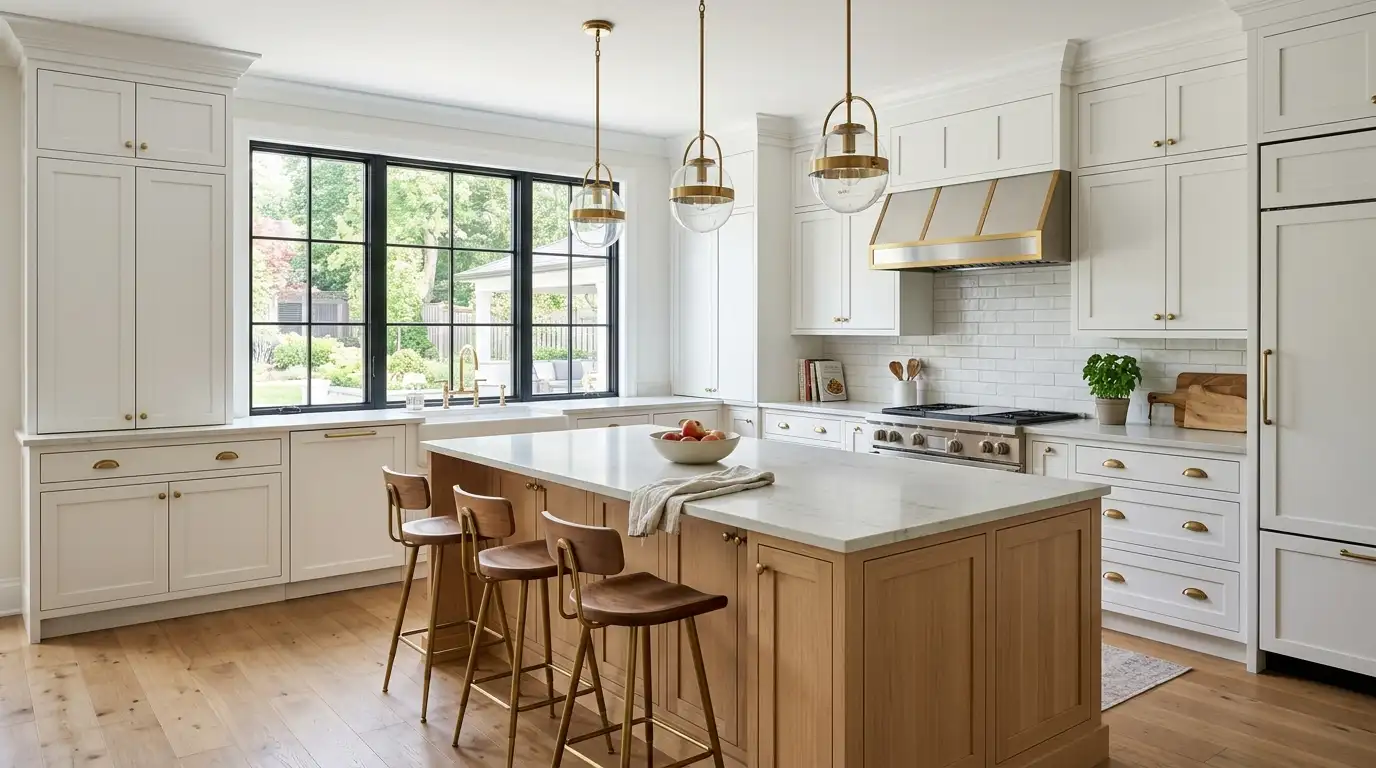
Shaker style cabinets have a five-piece door with a flat recessed center panel, straight rails, and square edges. They suit traditional, modern, and transitional kitchens without looking forced in any of them. Easy to clean, strong resale value, and the most popular cabinet door style in the US right now.
Walk into any kitchen showroom in America and shaker cabinets styles are front and center. That is not a coincidence. They work across home styles, hold up for decades, and cost less than most decorative alternatives without looking cheap.
Why Are They Called Shaker Cabinets?
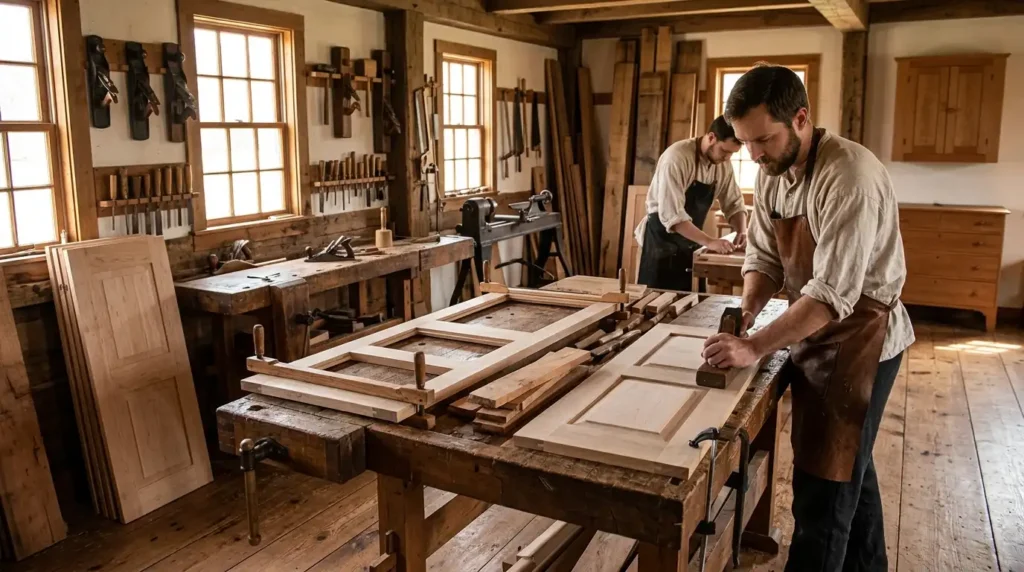
So, what is a shaker cabinet? The name comes from a New England religious community called the Shakers, who were active from the late 1700s onward. They built everything around simplicity and function with zero decorative excess. Their furniture was known for clean lines, practical construction, and exceptional craftsmanship, qualities that still define shaker cabinetry today. Their furniture was so well-made and practical that the style spread into mainstream American homes over generations. The five-piece recessed panel door became a cabinetry staple from that point and never left. Today, what is a shaker cabinet still comes down to that same door construction.
How Shaker Cabinet Doors Are Made
Two vertical stiles and two horizontal rails get cut from solid wood or MDF, a groove gets routed along the inside edge of each piece, and a flat center panel slides into those grooves. That panel floats rather than being glued down, and understanding what is a shaker cabinet really starts here, at the joinery level. Seasonal wood movement happens without cracking joints or pushing the finish off.
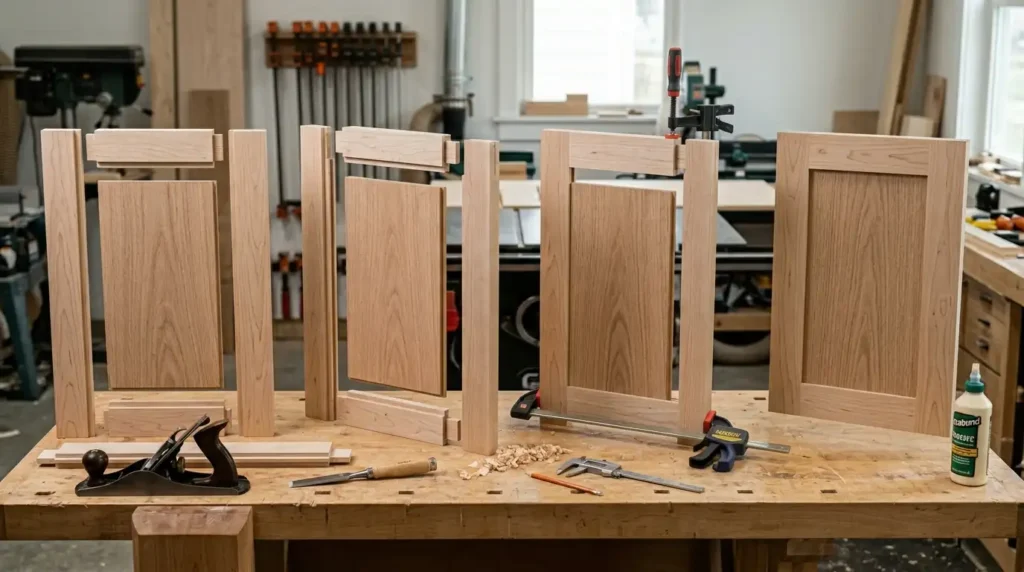
The recessed panel sitting slightly below the frame surface is what creates the shadow line you see on shaker cabinet fronts. Quality doors use solid maple, oak, or cherry for the frame. MDF center panels work fine for painted finishes. Stained shaker cabinet door styles need real wood throughout.
One thing that catches people off guard: improperly kiln-dried frame pieces move after installation and open corner joints within the first year. That is one of the most common problems with cheaper builds. Before ordering doors, locking down your standard cabinet dimensions upfront saves you from expensive late changes.
Shaker Cabinets Types Explained
Shaker cabinets styles are split into five main versions. Same five-piece bones across all of them, but frame width and panel depth change everything about how the final door reads in a room.
- Standard Shaker has a 2 to 2.5 inch wide frame. The classic version. Works in traditional and transitional kitchens without effort.
- Slim shakers bring that frame down to 1 to 1.5 inches. The panel dominates the door face, and the whole thing reads cleaner and more modern. A go-to for contemporary kitchen builds.
- Contemporary Shaker pairs the standard five-piece build with integrated grip channels or touch-latch hardware for a fully handle-free look.
- Beveled / Stepped Shaker adds a slight profile on the inside edge between frame and panel. More depth than a flat shaker without going anywhere near ornate.
- Shallow shakers cabinets use a less deeply recessed panel. The shadow line stays subtle. Good when you want shaker character without heavy visual contrast.
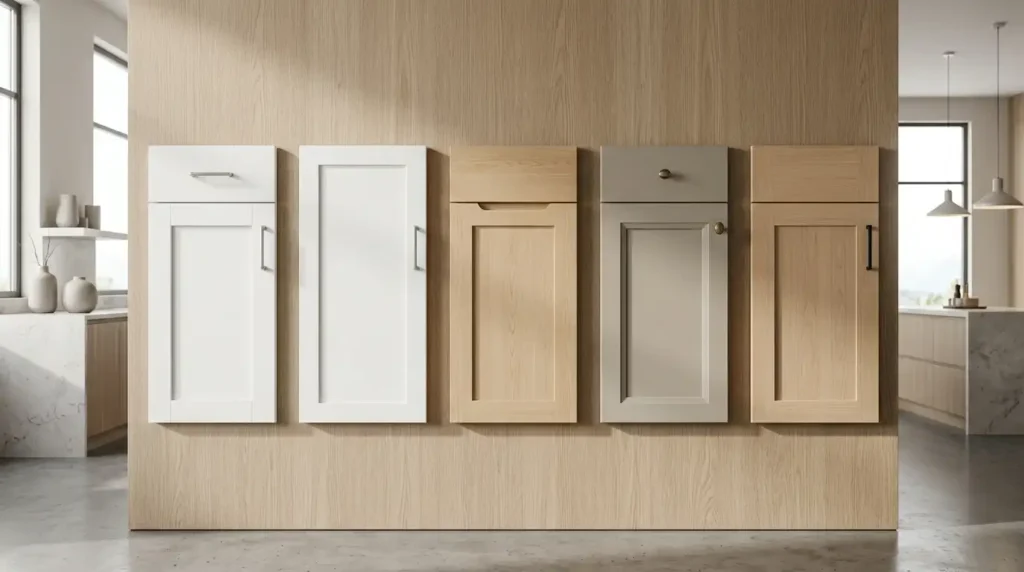
Slim and beveled profiles cost more than standard because the tolerances are tighter and the machining takes longer. Worth knowing when comparing quotes. And if you are deciding between factory custom and flat-pack stock, reading up on custom vs. RTA cabinets before you commit clarifies what that price gap actually gets you.
Shaker Cabinets vs Other Door Styles
| Style | Frame Detail | Best Kitchen Style | Cost Per Linear Foot | Cleanability |
|---|---|---|---|---|
| Standard Shaker | Flat recessed panel | Any style | $80 to $400 | Easy |
| Slim Shaker | Narrow frame, large panel | Modern, contemporary | $120 to $500 | Easy |
| Beveled Shaker | Stepped inner edge | Transitional | $150 to $500 | Easy |
| Flat Slab | No frame or panel | Modern only | $70 to $350 | Very easy |
| Raised Panel | Routed raised center | Traditional, formal | $200 to $600 | Harder |
| Inset | Flush with face frame | Custom traditional | $300 to $800 | Moderate |
Shaker cabinets vs traditional raised panel is a straightforward trade. Raised panel doors carry more visual weight and suit formal kitchens and older home styles. Shaker style cabinets sit in the middle without committing to either direction, which is why they work across so many different homes.
Shaker cabinets vs flat slab is the comparison that comes up most right now. Flat doors are the easiest to make, the sharpest looking, and the worst for hiding fingerprints and minor warps in the material. Shaker doors forgive surface imperfections better and add visual depth without competing with anything else in the room. Locking yourself into the wrong door style for your existing architecture is one of the most costly kitchen remodeling mistakes you can make.
How Much Do Shaker Doors Actually Cost?
Are shaker doors expensive? Not compared to most alternatives. Five-piece construction is efficient for cabinet shops to build, which keeps costs lower than carved or raised panel options.
Stock shaker cabinets start around $80 to $200 per linear foot at US retailers. Semi-custom runs $150 to $400. Full custom with premium wood species and factory finishes goes $400 to $1,200 per linear foot. Slim and beveled profiles sit at the higher end because the machining is more precise.
Shaker cabinets styles also hold up at resale better than most door styles. Buyers in the US recognize the look and associate it with quality, even on stock builds. That perception has real value when you eventually sell.
Shaker Cabinet Hardware: What Actually Works
Bar pulls and knobs are the two main hardware categories for shaker doors, and they pull the look in very different directions. Here is what each pick does to the overall feel of the room:
- Brushed nickel bar pulls: Neutral and safe. Works with white, gray, navy, and wood tones without competing.
- Matte black bar pulls: Modern and sharp. Strong contrast on lighter shaker doors.
- Unlacquered brass knobs: Warm, farmhouse feel. Ages naturally and develops patina over time.
- Cup or bin pulls: Traditional pairing. Best on painted shaker doors in cream, navy, or sage.
- Integrated grip channels: No visible hardware. Suits contemporary shaker builds only.
What hardware looks best on shaker cabinets is one of the most searched questions about this door style. Bar pulls between 5 and 8 inches are the most popular length in US kitchens right now. That size proportions well against a standard 2 to 2.5 inch shaker frame without overwhelming the door face. Shaker Cabinet Hardware choices matter more than people realize because the wrong pick makes a quality door look off.
Why Are Shaker Cabinets So Popular?
Three things stack up that other door styles cannot match together.
- First, they do not commit you to one design era. A slab reads modern. A raised panel reads traditional. Shaker reads both. When you are making a decision you plan to live with for 15 or 20 years, that flexibility is genuinely valuable.
- Second, cleaning is simple. The flat recessed center panel has no carved grooves for grease to sit in. A damp cloth after cooking handles almost everything.
- Third, they proportion well across all kitchen sizes. Small kitchens, large open-plan layouts, narrow galleys. Shaker cabinet fronts work in all of them. Most door styles do not travel that well across different room conditions.
For any kitchen or closet project using shaker doors, working with custom cabinetry contractors who build from solid materials means getting the frame width, finish, and proportions right from day one.
Frequently Asked Questions
What is a shaker cabinet exactly?
A five-piece door with two stiles, two rails, and a flat recessed center panel. No carvings or decorative profiles, just clean square edges that suit almost any kitchen style.
Why are shaker cabinets so popular?
They work in traditional, modern, and transitional kitchens equally well. Easy to clean, hold resale value, and cost less than most ornate door styles without looking generic or budget.
Are shaker doors more expensive than flat slab?
A little. Flat slab is the simplest door to produce. Five-piece shaker construction needs more parts and tighter joinery. The gap is small on stock lines but grows in full custom builds.
What hardware looks best on shaker style cabinets?
Brushed nickel or matte black bar pulls between 5 and 8 inches for most kitchens. Brass knobs in farmhouse and transitional spaces. Contemporary shaker builds usually skip hardware with integrated grip channels.
Can shaker cabinets work in a modern kitchen?
Easily. Slim shakers with a narrow frame, matte painted finish, and matte black hardware read very contemporary. The minimal frame does not pull the room toward any specific era.
What wood is best for shaker cabinet doors?
Maple for painted finishes. Oak or cherry for stained finishes. Alder for painted builds on a tighter budget. MDF center panels are common in stock lines and hold paint well in dry spaces.
The Bottom Line
Shaker style cabinets stay at the top of US kitchen design because they actually work across styles, budgets, and room sizes. Standard, slim, beveled, or contemporary shaker, the construction holds up, and the look does not date.
Get the frame width, material, and hardware right for your specific space, and you will not regret it a decade from now. Reach out to custom cabinetry contractors who build shaker doors with solid materials and factory-quality finishes from the start.