Ever stood in your kitchen and wondered why that corner cabinet feels awkward to use? You open the door, reach in, and suddenly half the space feels impossible to access. Kitchen corners often look harmless on a floor plan, just two walls meeting neatly at a 90 degree angle. But in real life, they can turn into wasted space, blocked drawers, or storage you avoid using altogether.
That is where smart planning makes all the difference.
One of the most common solutions designers use is the blind corner cabinet. When designed correctly, it can turn a tricky corner into practical storage. When planned poorly, it can create long term frustration.
If you have been asking yourself what blind corner base cabinets are and whether they are the right fit for your kitchen, this guide explains everything in simple terms so you can design with clarity, avoid common mistakes, and make confident decisions with the help of a reliable custom cabinetry service.
Understanding the Purpose of a Blind Corner Cabinet
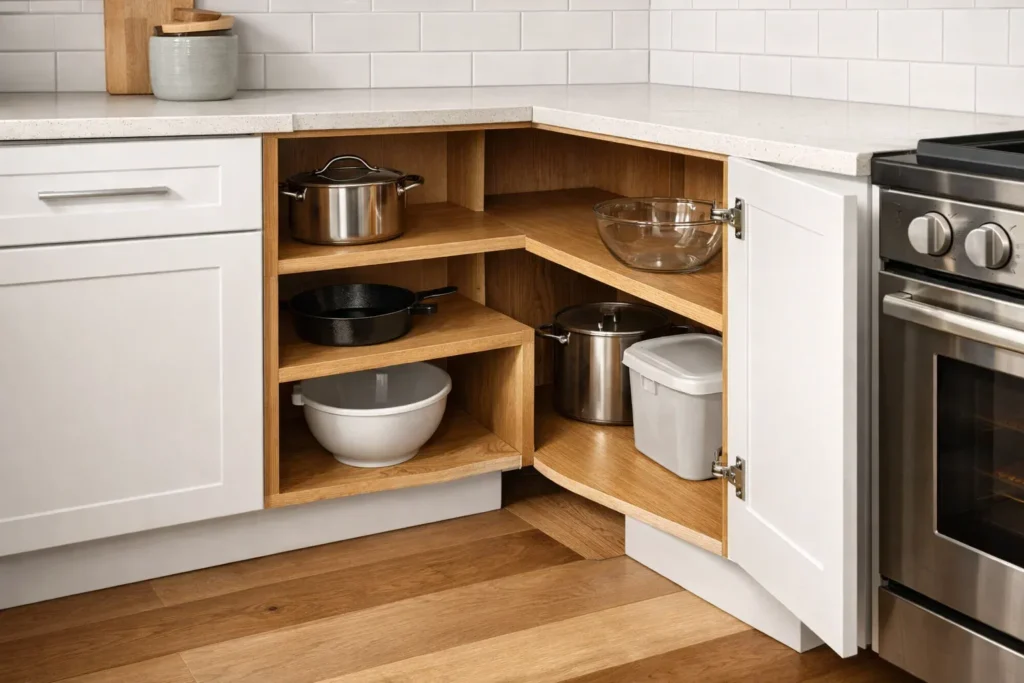
A blind corner cabinet is a type of corner base kitchen cabinet installed where two cabinet runs meet at a 90 degree angle. Instead of using a diagonal front or lazy Susan system, one cabinet extends into the corner while part of it remains hidden behind the adjoining cabinet.
From the front, it looks like a regular base cabinet. Inside, however, the storage extends deeper into the corner.
This design helps maintain a clean cabinet line while maximizing space in tighter layouts.
A properly planned blind corner cabinet layout allows you to use corner space efficiently without disrupting the flow of your kitchen.
Why Pull Is Critical in Corner Cabinet Planning
One of the most important terms in blind cabinet design is pull.
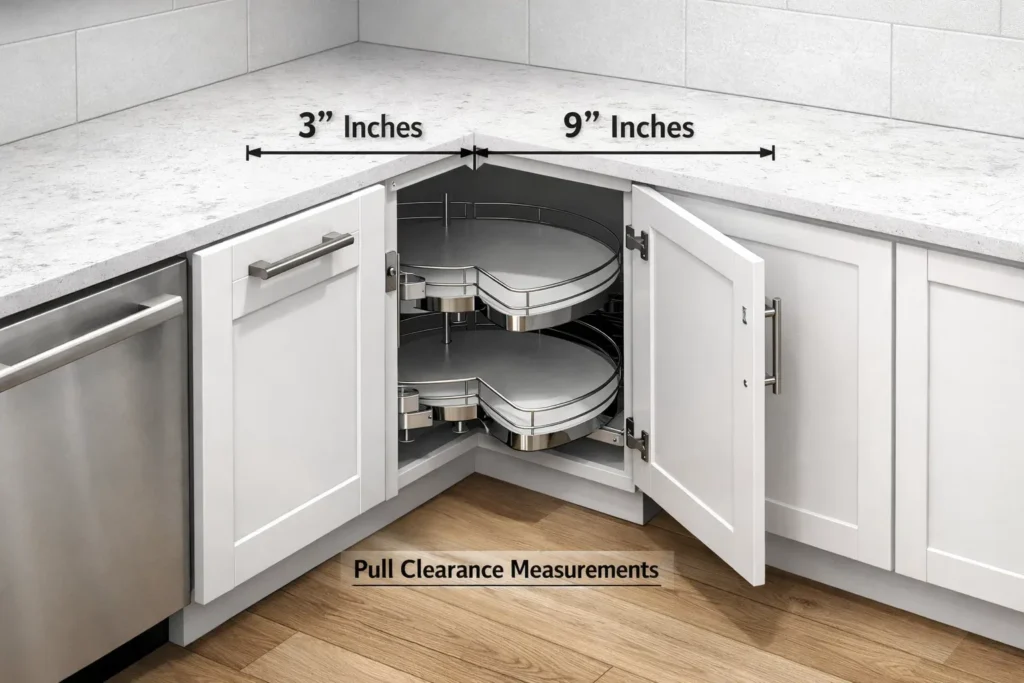
Pull refers to how far the cabinet must be offset from the adjacent wall to allow proper opening of doors and drawers.
- A minimum pull blind corner cabinet usually requires around 3 inches
- A maximum pull blind corner cabinet may require up to 9 inches depending on hardware and configuration
Without proper pull spacing, the blind corner cabinet door swing can interfere with nearby drawers or appliances.
When planning a corner base kitchen cabinet, ignoring pull measurements is one of the most common and costly mistakes.
Clearance: The Detail That Protects Functionality
Beyond pull, blind corner cabinet clearance ensures that doors open fully and adjacent cabinets function smoothly.
You must consider:
- Blind corner cabinet door clearance
- Appliance handle spacing
- Drawer extension range
- Walkway clearance
Poor kitchen blind corner design can cause daily frustration, especially in high traffic kitchens.
Planning clearance correctly keeps your layout efficient and comfortable.
Breaking Down Corner Base Cabinet Dimensions
Getting corner base cabinet dimensions right is essential before placing an order.
Typical blind base cabinet measurements include:
- Blind corner cabinet depth: 24 inches
- Blind corner cabinet height: 34.5 inches before countertop
- Blind corner cabinet sizes: Commonly 36, 42, or 48 inches wide
However, true corner base cabinet dimensions depend on:
- Wall length
- Required filler spacing
- Adjacent cabinet configuration
- Pull measurement
Incorrect dimensions can misalign your entire cabinet run. Professional planning ensures proper spacing and alignment.
Managing Dead Space the Smart Way
One concern homeowners often have is blind corner cabinet dead space.
Because part of the cabinet extends behind another cabinet, access can feel limited.
However, modern storage solutions can transform that hidden section into highly usable space.
With smart organization, a blind corner cabinet becomes practical rather than frustrating.
Functional Corner Base Cabinet Ideas That Improve Storage
Today’s hardware systems have improved blind cabinets significantly.
Here are practical ideas:
- Pull out tray systems
- Swing out shelving units
- Sliding organizers
- Custom interior dividers
These solutions make deep storage accessible and reduce wasted space.
They are especially helpful in a blind corner cabinet for small kitchens, where efficient storage is essential.
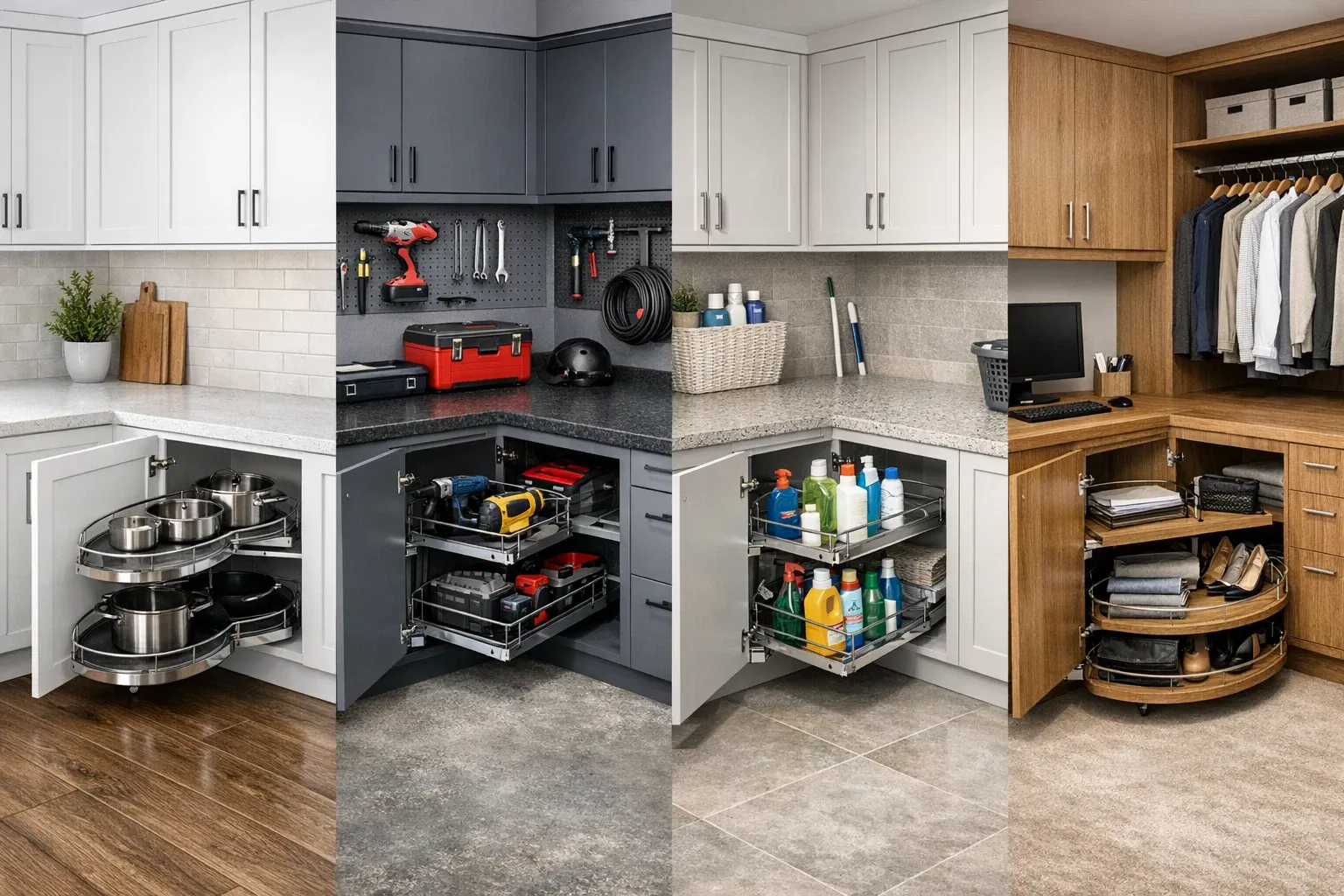
The same principles also apply to garage cabinetry, where maximizing tool and equipment storage is equally important.
The Role of Fillers and Structural Details
In most installations, a blind corner cabinet filler is required.
This narrow strip allows:
- Proper door opening
- Drawer clearance
- Balanced cabinet spacing
Some cabinets also include a blind corner cabinet stile, which reinforces structure and improves door alignment. Skipping fillers is one of the most common installation errors.
Wall Space Requirements You Should Know
Adequate blind corner cabinet wall space is necessary for functionality.
- 36 to 48 inches on one wall
- At least 24 inches on the adjoining wall
Exact requirements depend on selected cabinet dimensions and pull configuration. If space is tight, accurate planning becomes even more important.
Blind Corner Cabinet Cost Considerations
The blind corner cabinet price depends on:
- Material quality
- Stock vs custom construction
- Hardware upgrades
- Finish type
Stock cabinets may seem affordable, but custom built cabinets offer better precision and improved long term performance.
Design It Right the First Time With Expert Guidance

Choosing the right corner base kitchen cabinet is not just about fitting something into a 90 degree space. It is about making sure your kitchen works properly for years to come. Understanding blind corner base cabinets is the first step. Planning it correctly protects your investment.
At Knudson Cabinetry, homeowners receive guidance through smart layout decisions that help prevent wasted space, clearance issues, and installation mistakes. Whether remodeling or designing a new kitchen, expert support helps ensure the right solution for your storage needs and functionality.
Professional custom cabinetry makers can help you choose the best option for your layout.
When Is a Blind Corner Cabinet the Right Choice
- You want a continuous cabinet run
- Space is limited
- You prefer a traditional layout
- You need flexibility in adjacent cabinet placement
With proper planning, a blind corner cabinet becomes one of the most efficient storage solutions in your kitchen.
The key is understanding measurements, pull, clearance, and layout compatibility before installation.
FAQs
What is a blind corner base cabinet
A blind corner base cabinet is a corner cabinet where part of the storage extends into the corner and remains partially hidden behind an adjoining cabinet.
How much space does a blind corner cabinet need
It typically requires 36 to 48 inches on one wall and at least 24 inches on the adjacent wall, depending on layout.
What does pull mean in a blind corner cabinet
Pull refers to the spacing needed between the cabinet and wall to allow proper door and drawer operation.
What is the minimum and maximum pull for a blind corner cabinet
Minimum pull is usually around 3 inches, while maximum pull can extend up to 9 inches depending on design.
Do blind corner cabinets require a filler strip
Yes, most installations require a filler strip to allow proper clearance and smooth operation.
How deep is a blind corner base cabinet
Standard depth is typically 24 inches.
What are common mistakes when installing a blind corner cabinet
Common mistakes include ignoring pull spacing, incorrect measurements, and skipping filler strips.